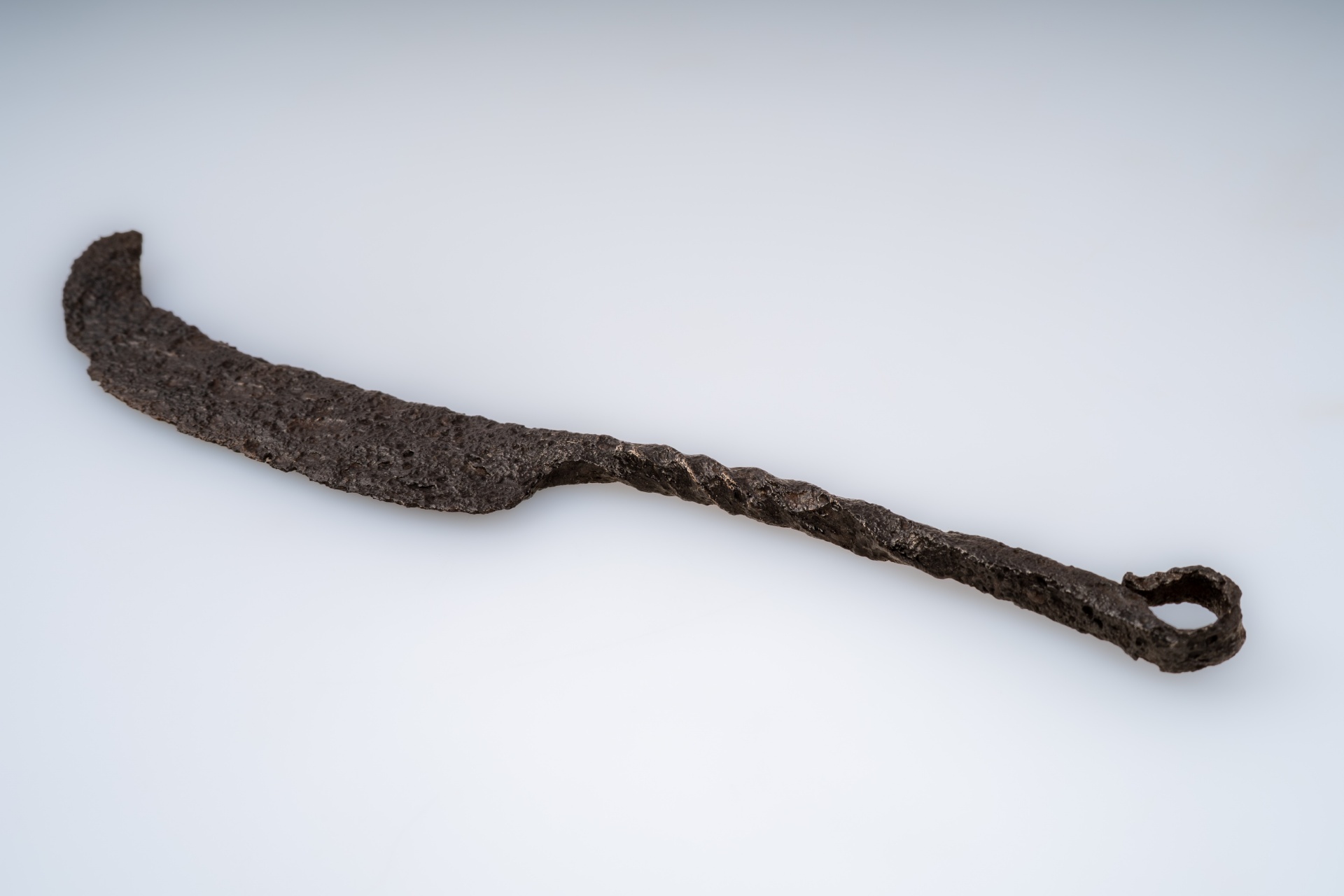
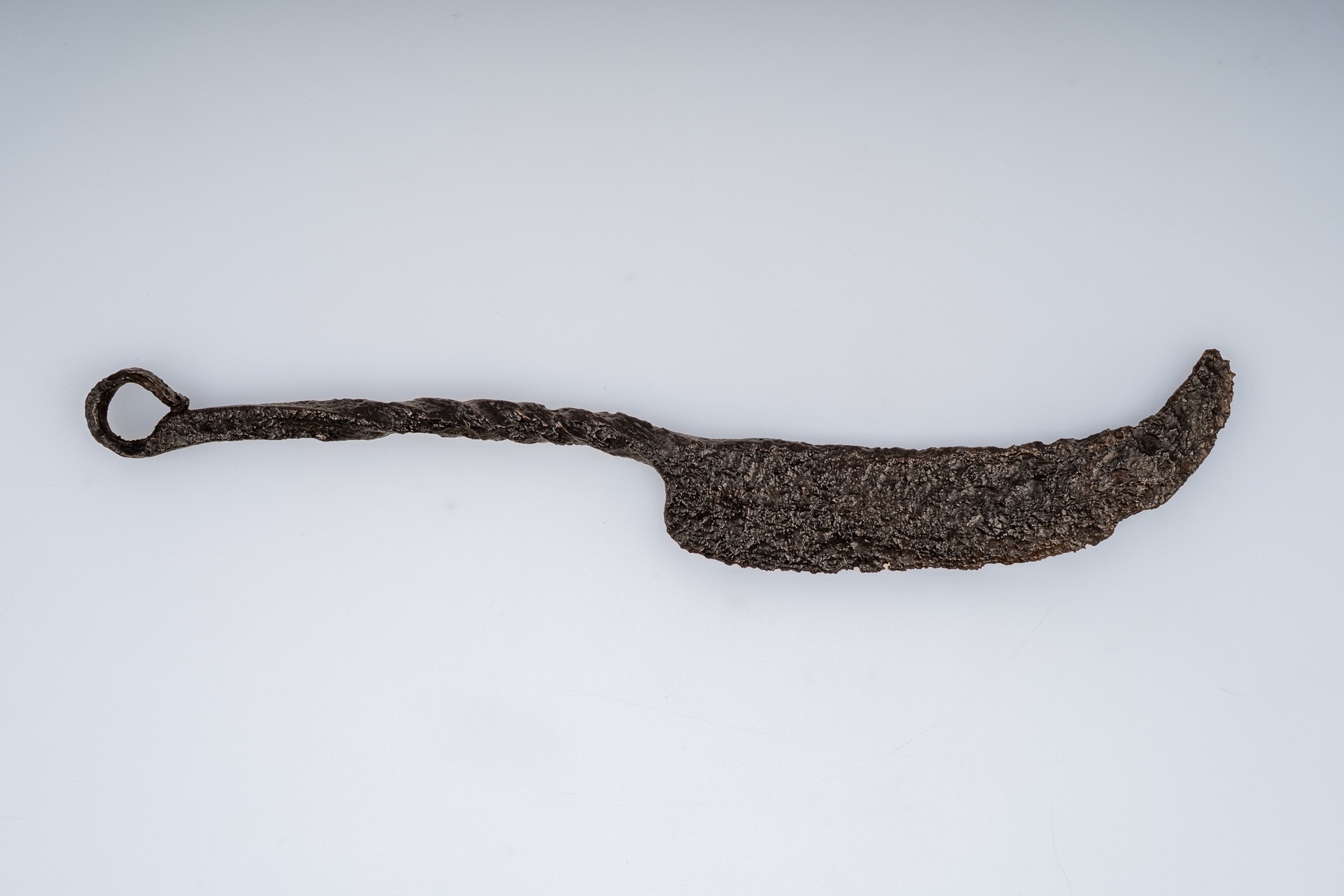
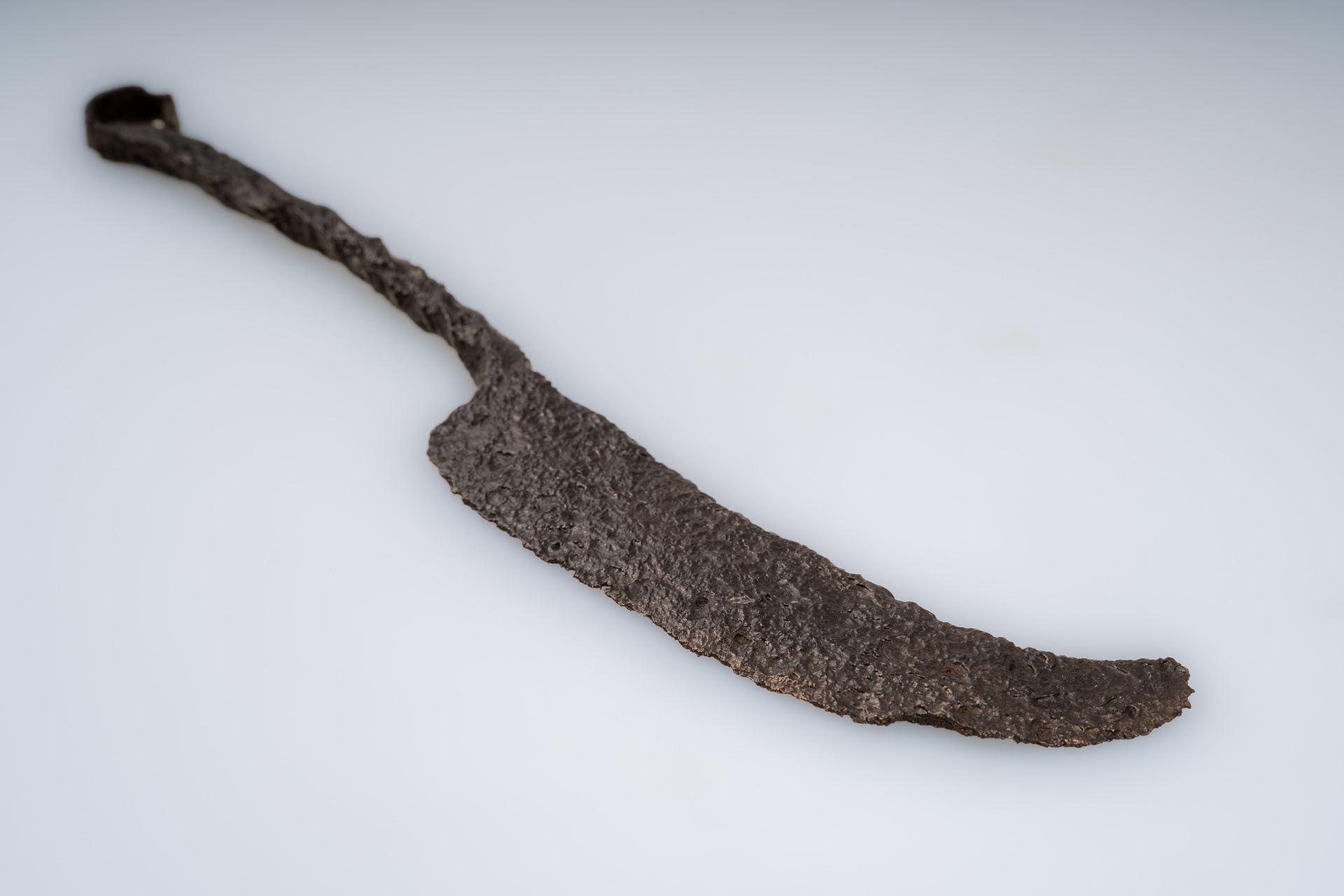
For the object of the month of April, we chose a late medieval skinning knife, discovered in 2025 during the resumed archaeological research at Mihăileni–Cibrefalva, from the excavation of a dwelling dated to the late 16th century – early 17th century. The medieval Hungarian skinning knife was typically a short, wide tool with a curved blade and a pointed tip, used for removing the hides of wild animals and for various cutting tasks. Based on archaeological finds, these knives were functional and made with sturdy handles. They were often indispensable accessories of everyday life in the late Middle Ages, used in hunting and crafts. Knife culture in medieval Hungary was diverse, with the shape of the blade determined by its function, making the skinning knife a specialized tool directly associated with leatherworking.
The blade of the skinning knife was curved to allow efficient removal of the hide, while the tip was pointed or slightly rounded to avoid damaging it. The blade was made of high-quality wrought iron, and the handle tang was shaped in a spiral form, with its end fitted with a hook-like loop, allowing it to be hung from a belt using a sinew or a cord.
It was primarily used in leather processing (skinning), but in everyday life it could also serve as a table knife.