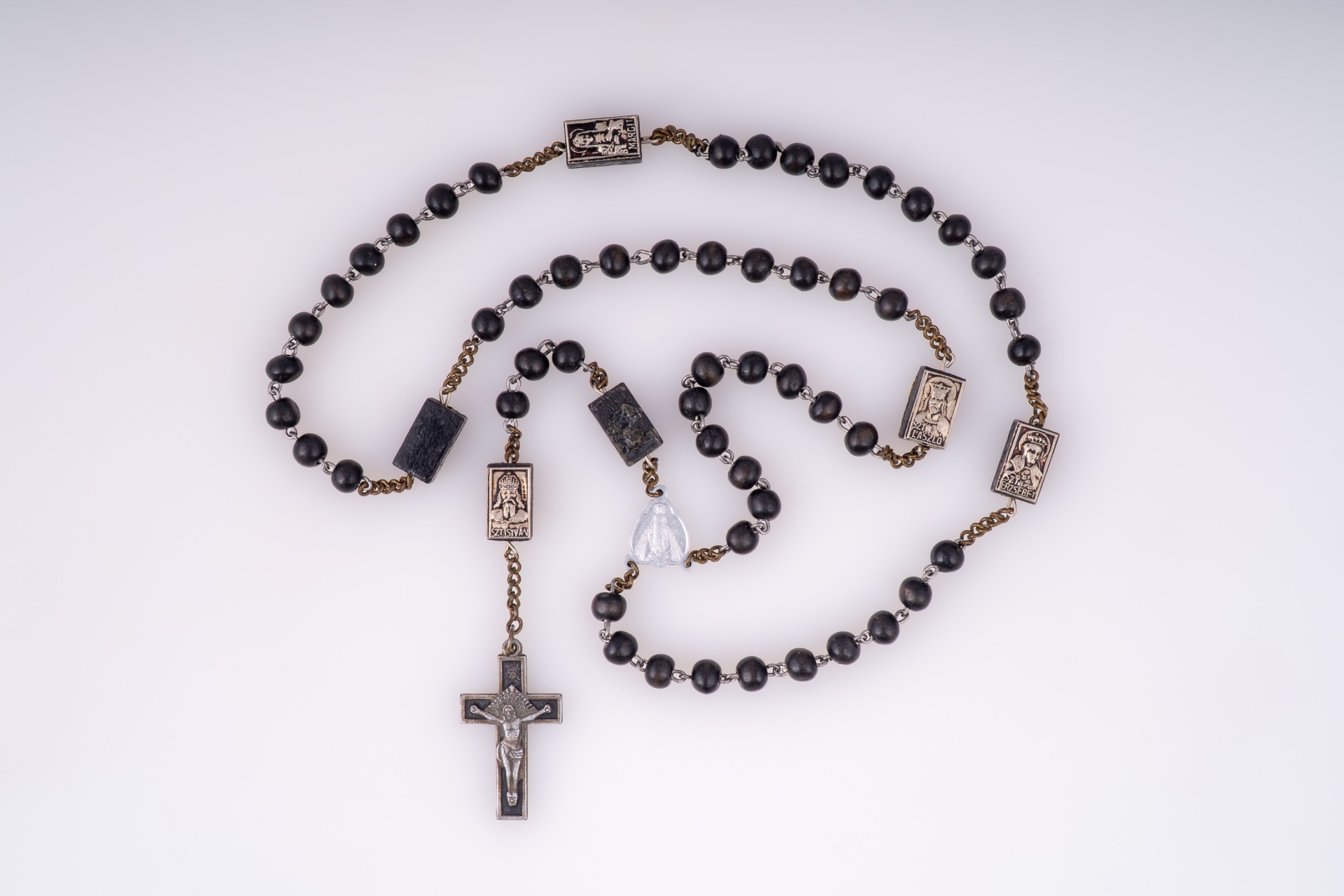
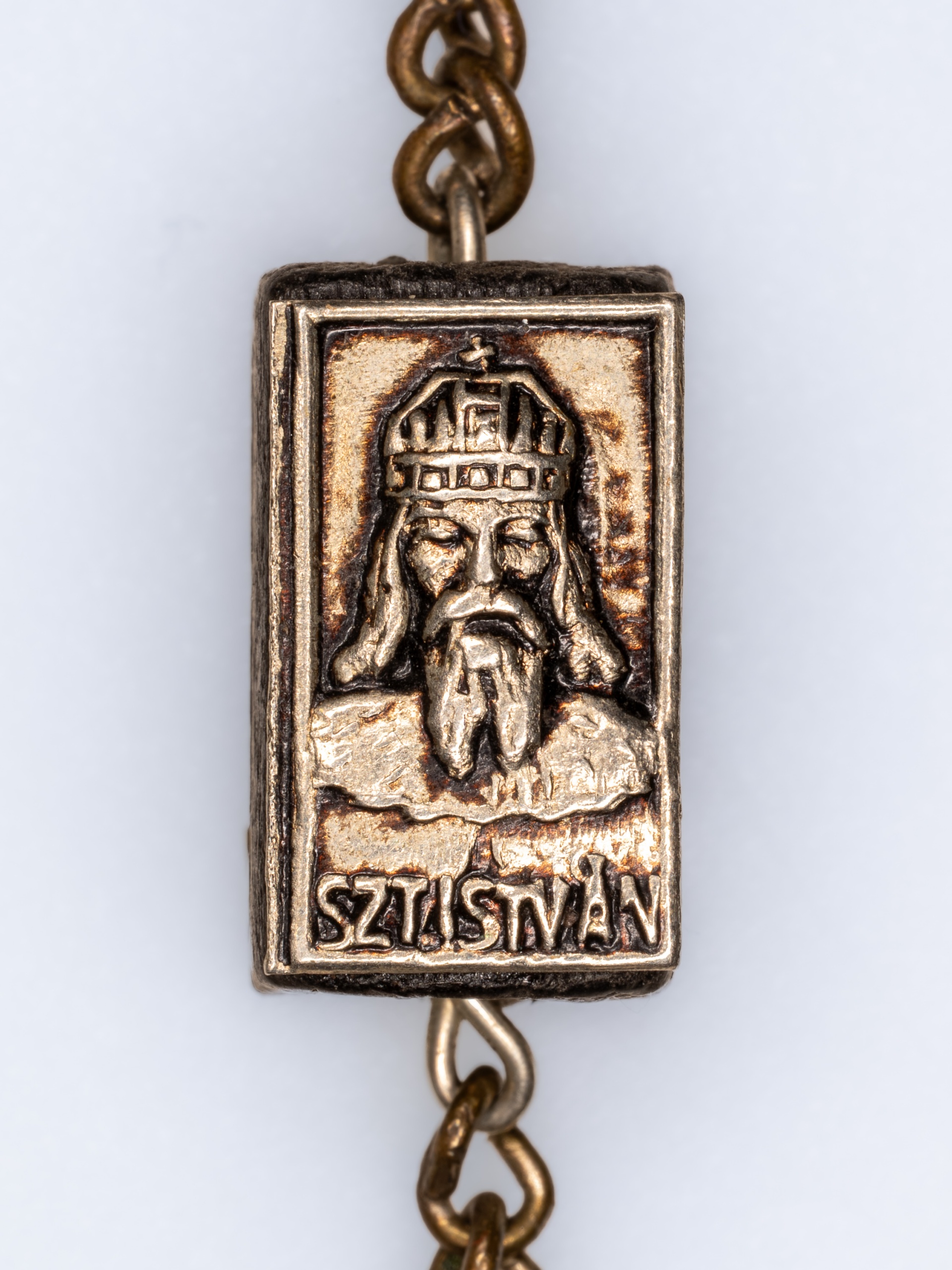
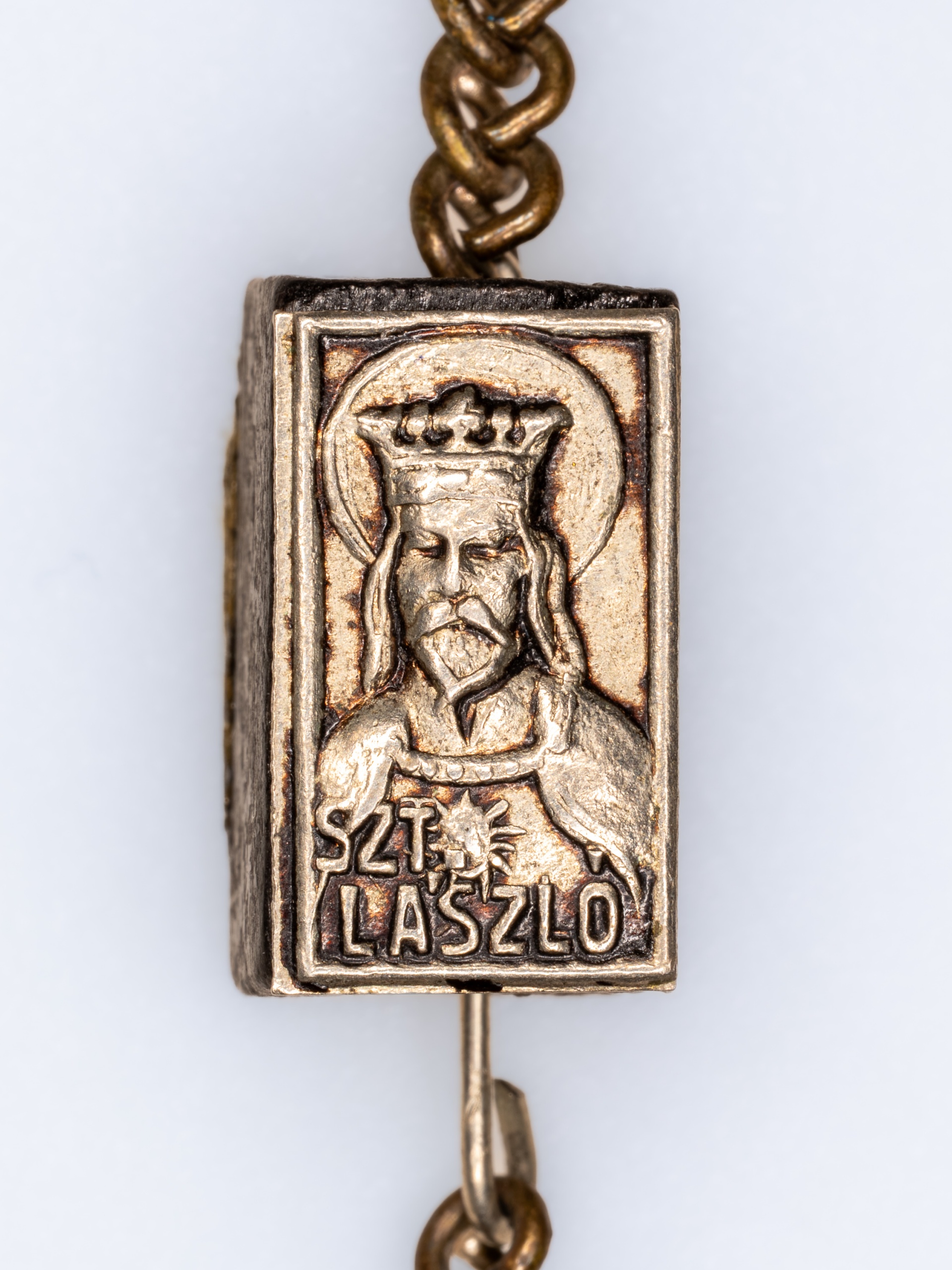
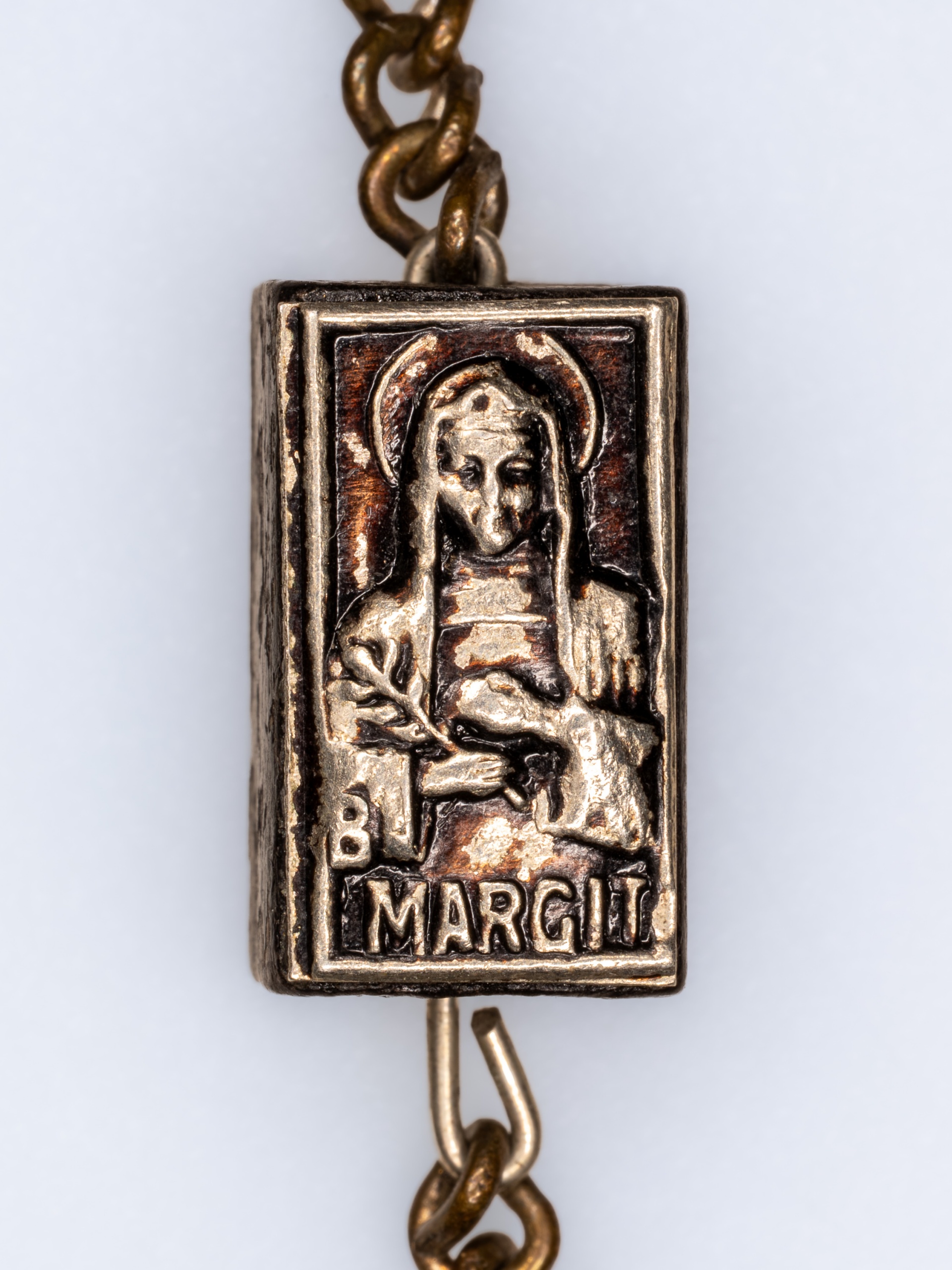
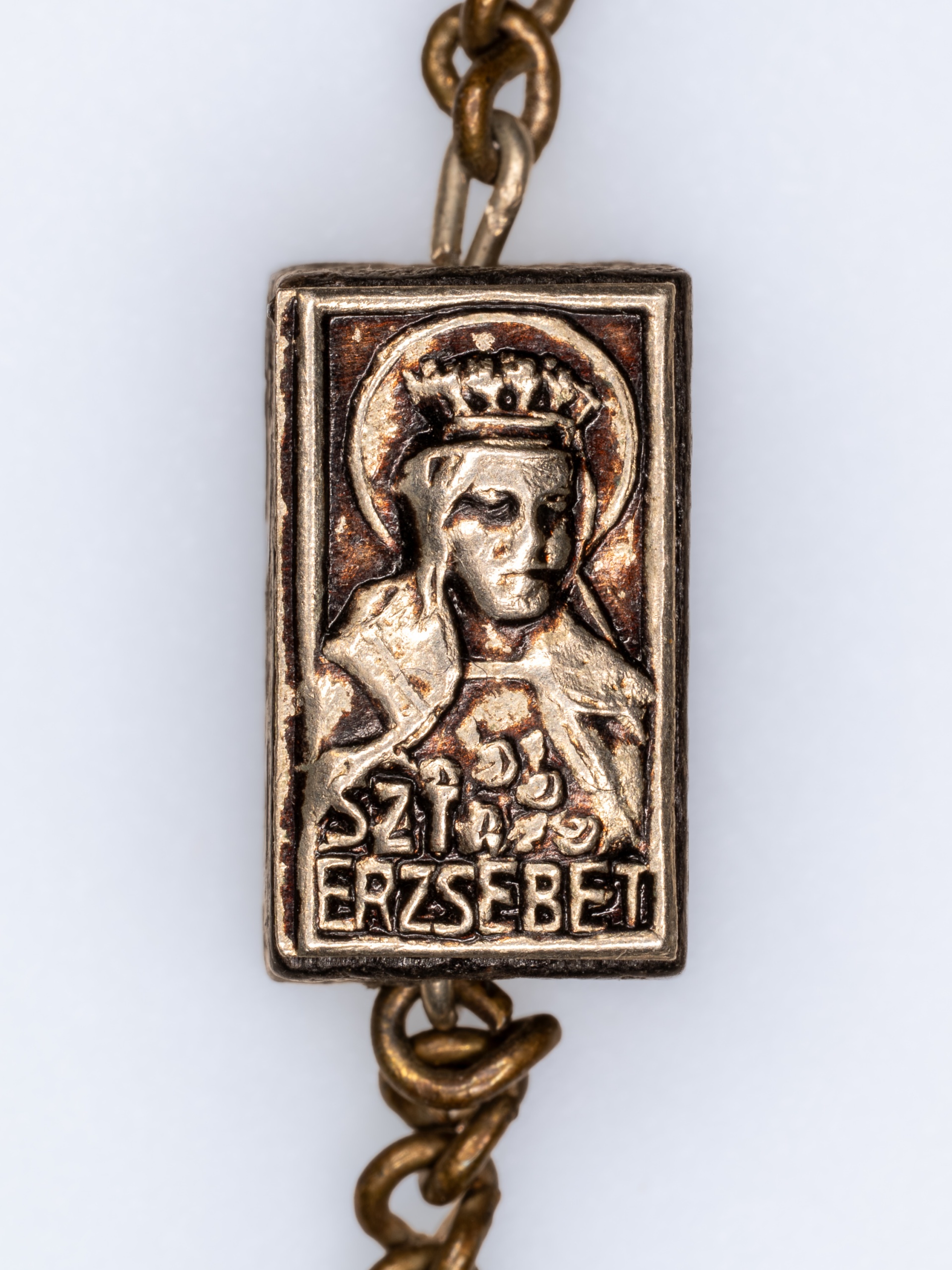
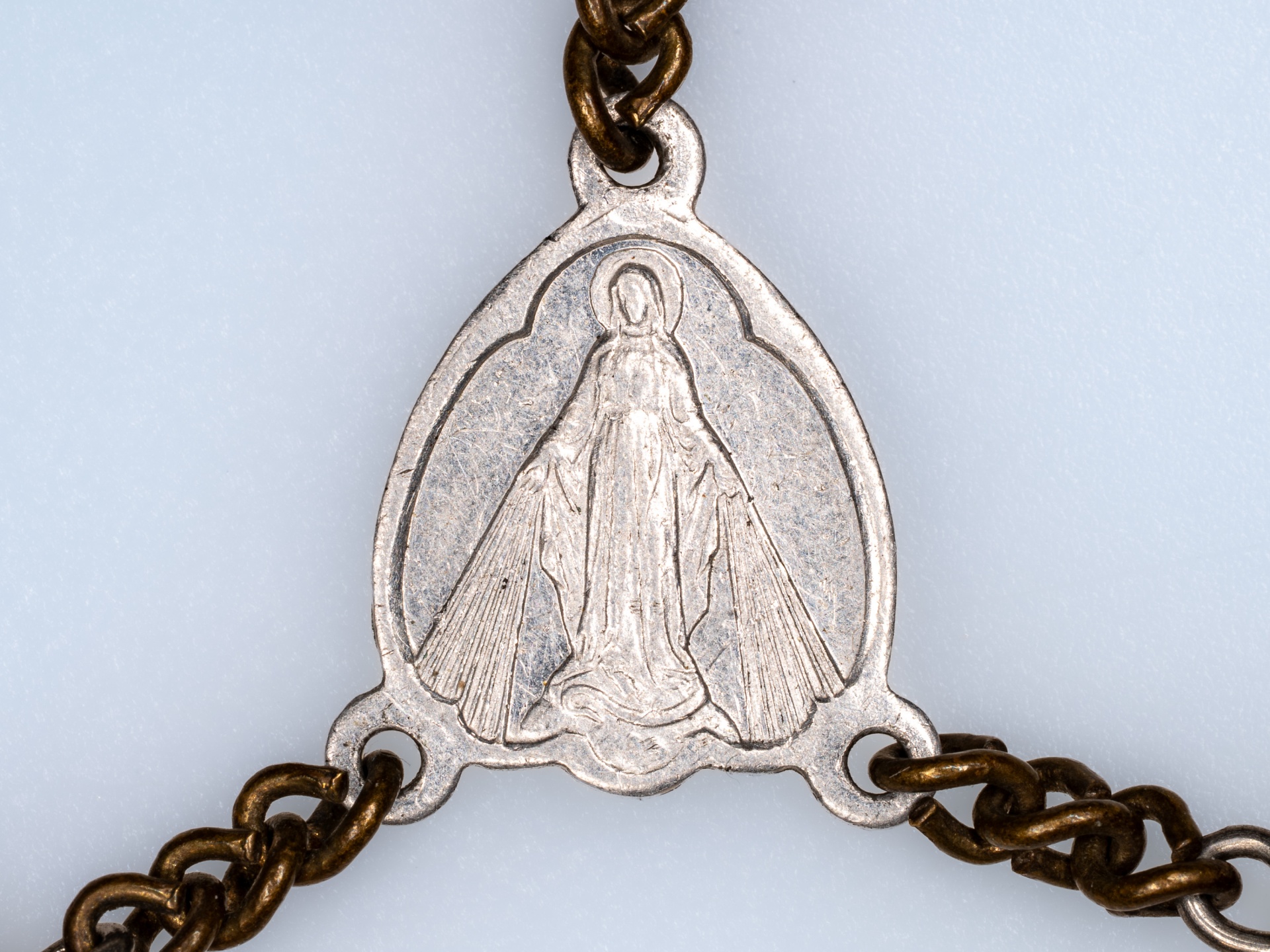
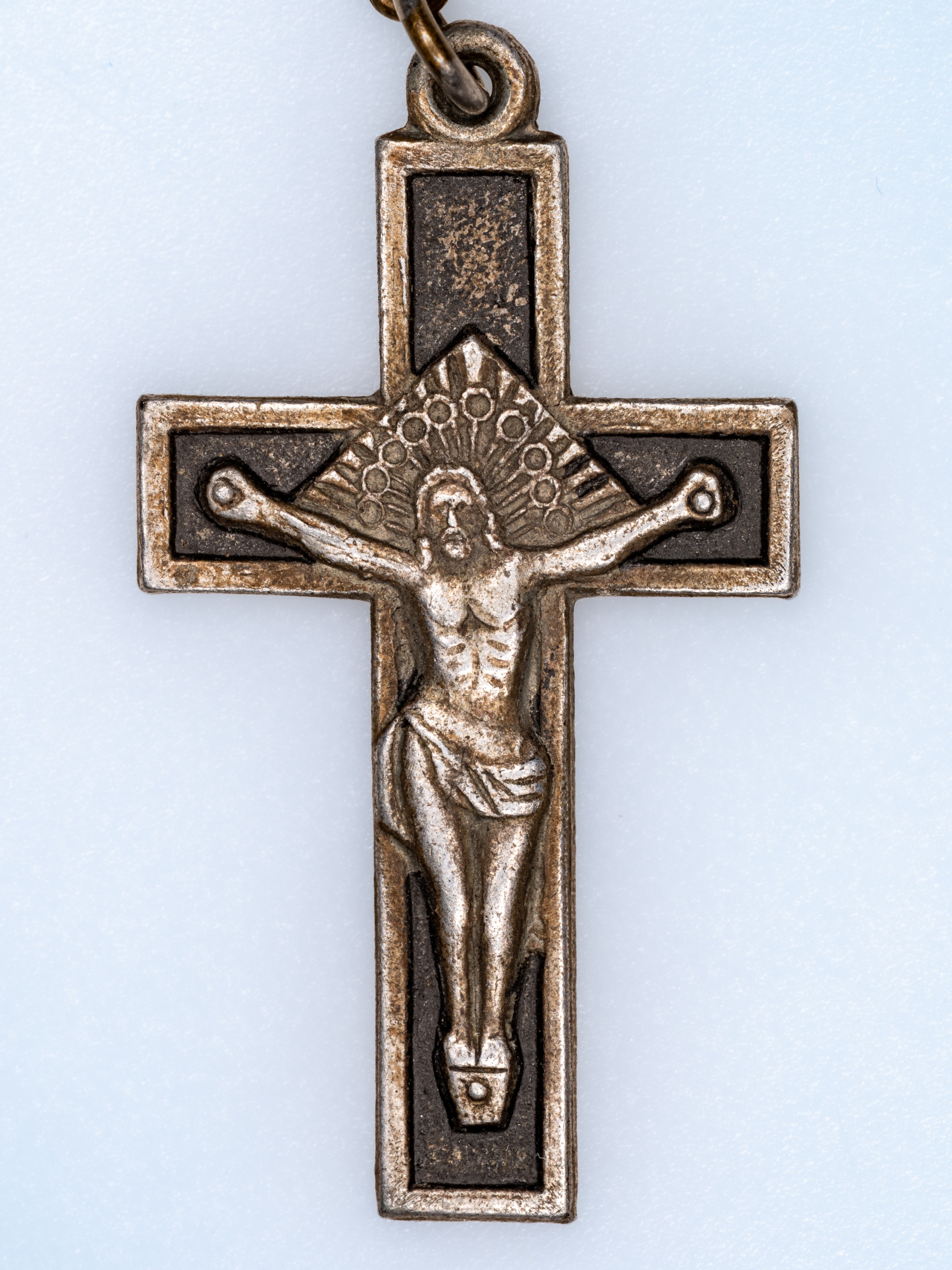
October holds a special significance in the Catholic liturgy: it is considered the month of the Rosary, with the Feast of Our Lady of the Rosary, celebrated on October 7, and the Feast of the Blessed Virgin Mary, Patrona Hungariae, celebrated on October 8. A significant date in local religious life is also closely connected to these liturgical celebrations, as the Millennium Church in Miercurea-Ciuc, dedicated to the Blessed Virgin Mary and the Hungarian saints, was consecrated on October 18, 2003. A fitting symbol of these sacred events, and a link between them, is the object selected from the historical collection of the Szekler Museum of Ciuc: a rosary (string of prayer beads) depicting, among others, the Hungarian saints.
The piece preserved in our collection faithfully reflects the religious world and craft traditions of the Ciuc area in the mid-20th century. The prayer of the Rosary and its communal forms spread throughout Central Europe from the 15th and 16th centuries onwards through the Dominican friars. In Ciuc, the Franciscan friars who settled in Șumuleu-Ciuc became the principal promoters of Marian devotion and the prayer of the Rosary.
The depictions of the Hungarian saints on the larger beads give the object a dual dimension: while praying the “Hail Mary”, the faithful not only meditate on the events of the Gospel but also pray to the saints as protectors and intercessors of their community. The beads, strung one after another and made of wood, were used to count the “Our Father” and “Hail Mary” prayers, helping the person praying to deepen their meditation and spiritual life. In addition to daily prayer, the rosary was often worn as an accessory to traditional dress, as a protective amulet, or as a companion on the journey to the afterlife. We do not know its former owner, but the degree of wear on the rosary, bears witness to a life of active faith and devoted prayer.
Pope John Paul II reminds us that “in the Rosary, the specific method of meditating on the mysteries of Christ is repetition, which naturally fosters identification with the mysteries. If the prayer is recited superficially, it can become dry, but if we regard it as an expression of love, we do not grow tired of returning again and again to the beloved person. The repetition of the ‘Hail Mary’ is addressed directly to Mary, while the act of love is directed towards Jesus, with her and through her.”
Magyari Éva historian, conservator