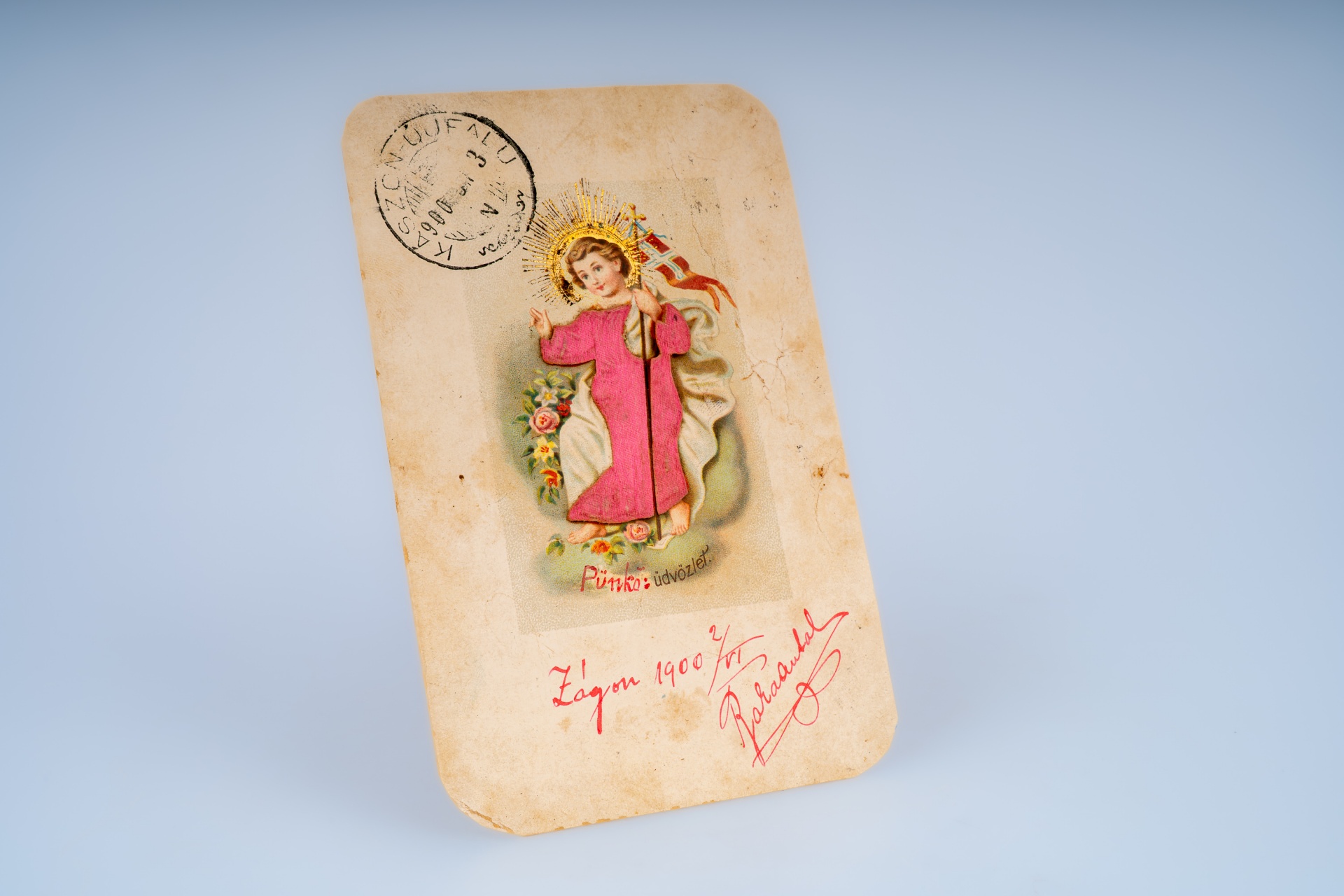
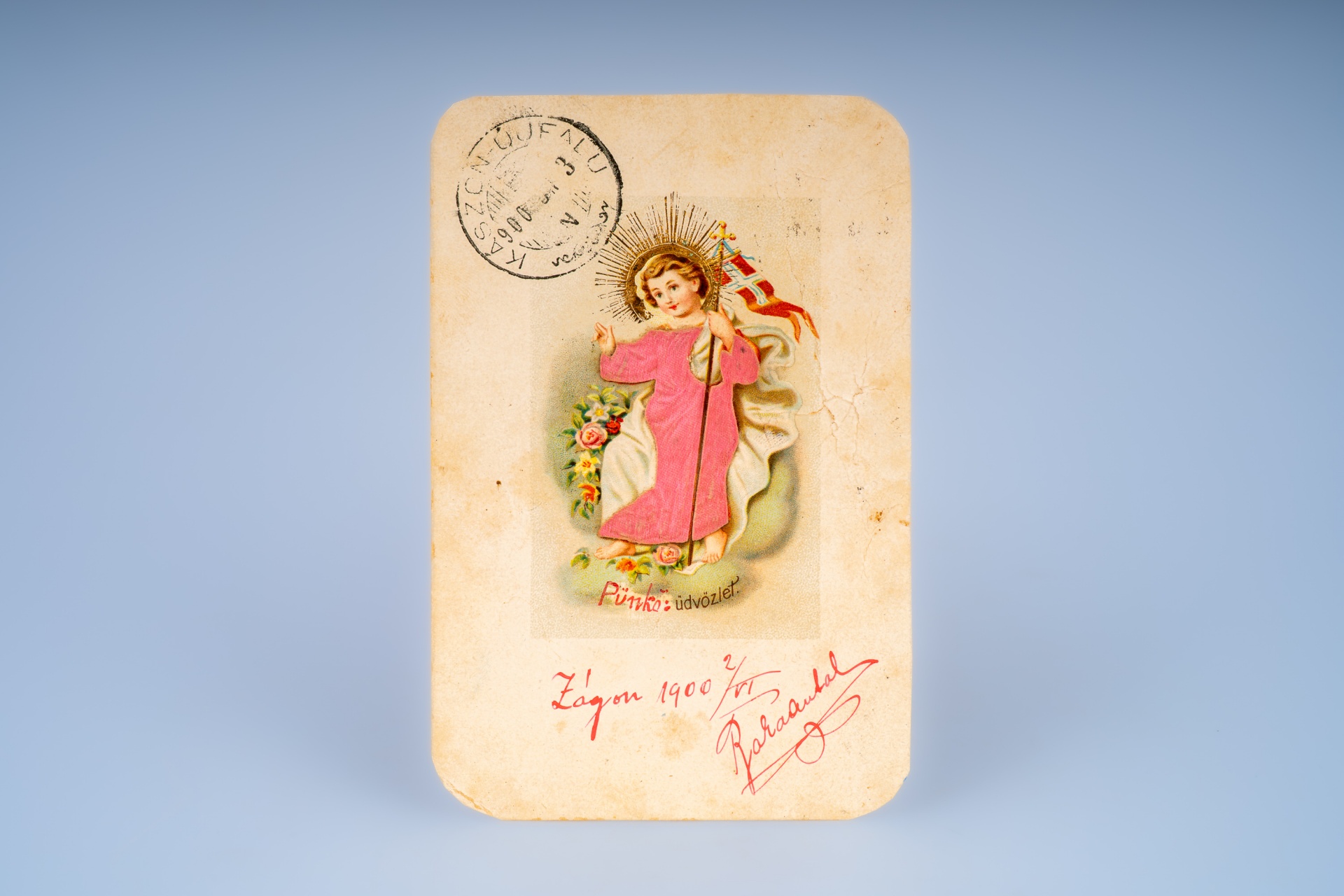
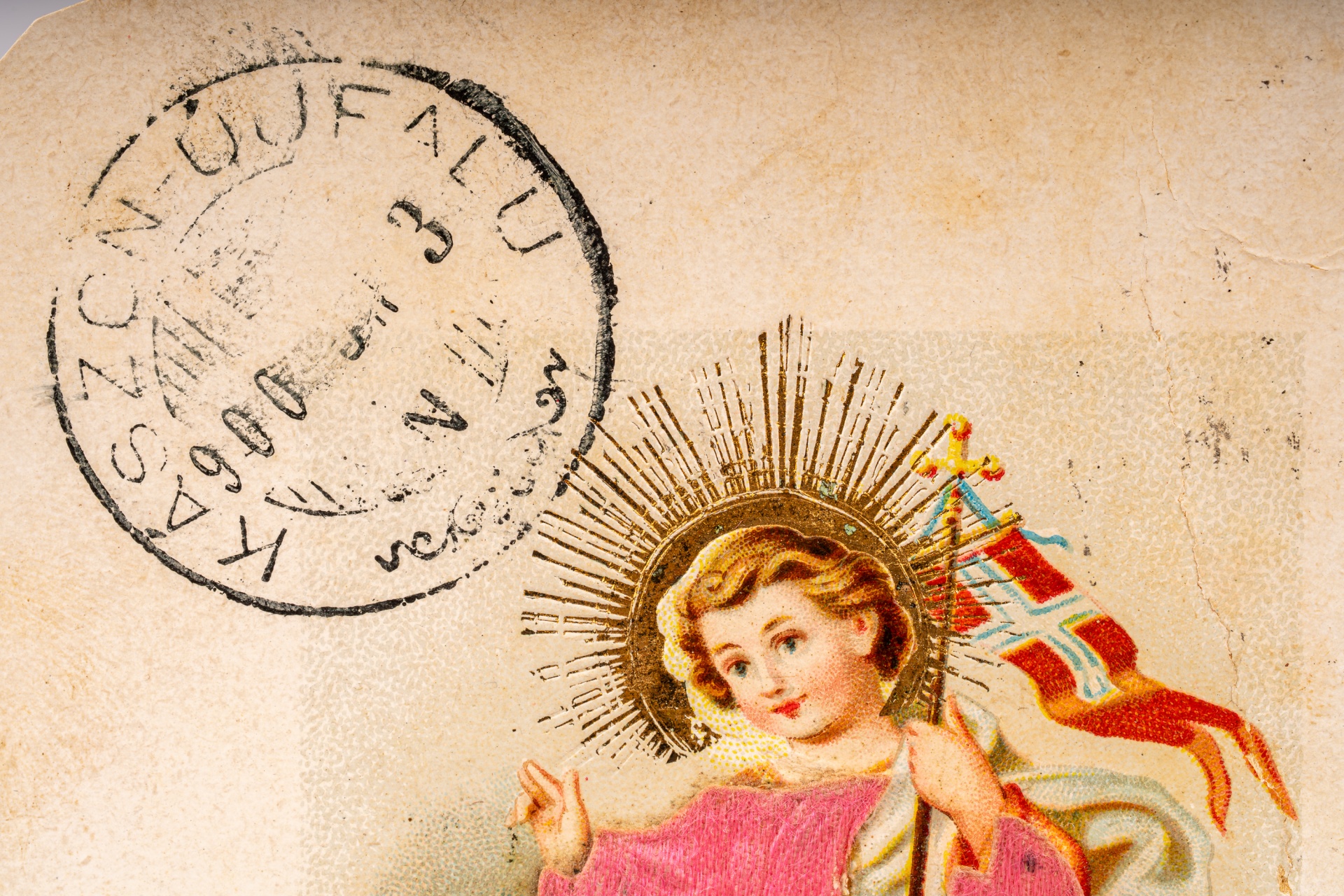
As the exhibit of the month, the festive illustrated postcard draws our attention to one of the most popular means of communication at the turn of the 19th and 20th centuries. The vibrant cultural atmosphere of the millennial period, along with technological progress, led to a golden age of sending and collecting illustrated postcards in Hungary at that time.
Postcards were made using specially manufactured cardboard designed for this purpose. In that period, a common decorative technique was embossing: the printed sheet was placed under a heated press so that the motifs would stand out in relief from the surface. Special pieces decorated with inserts of velvet, cloth or other textiles were not uncommon either. Postcards in which the clothing of the depicted figures was made from real textile material are referred to in the specialized literature as “dressed postcards.”
The choice of imagery often conveyed an emotional message in itself. A bouquet of flowers symbolized care and affectionate attention, while the peony was directly associated with the feast of Pentecost. In Pentecost-themed illustrations—according to the taste of the time—angelic figures and spring floral motifs often predominated. The popularity of these postcards was further enhanced by the fact that they served as appropriate greetings for both religious and secular recipients.
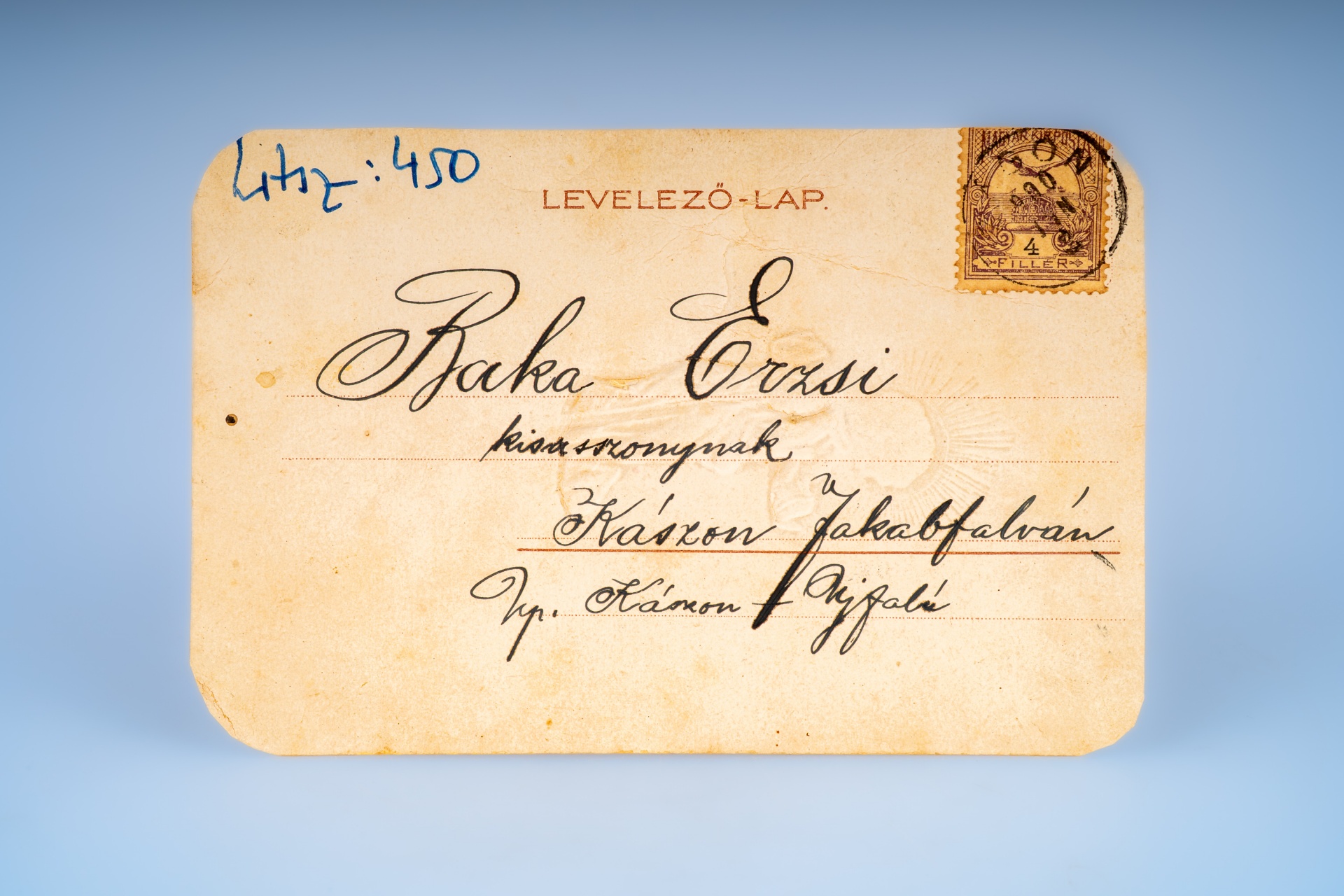
The piece selected from the History Collection of the Szekler Museum of Ciuc stands out not only for bearing the stylistic features characteristic of the period, but also for preserving valuable information about both the sender and the recipient. Thanks to the postmark, we can gain insight into the postal and correspondence practices of the time.
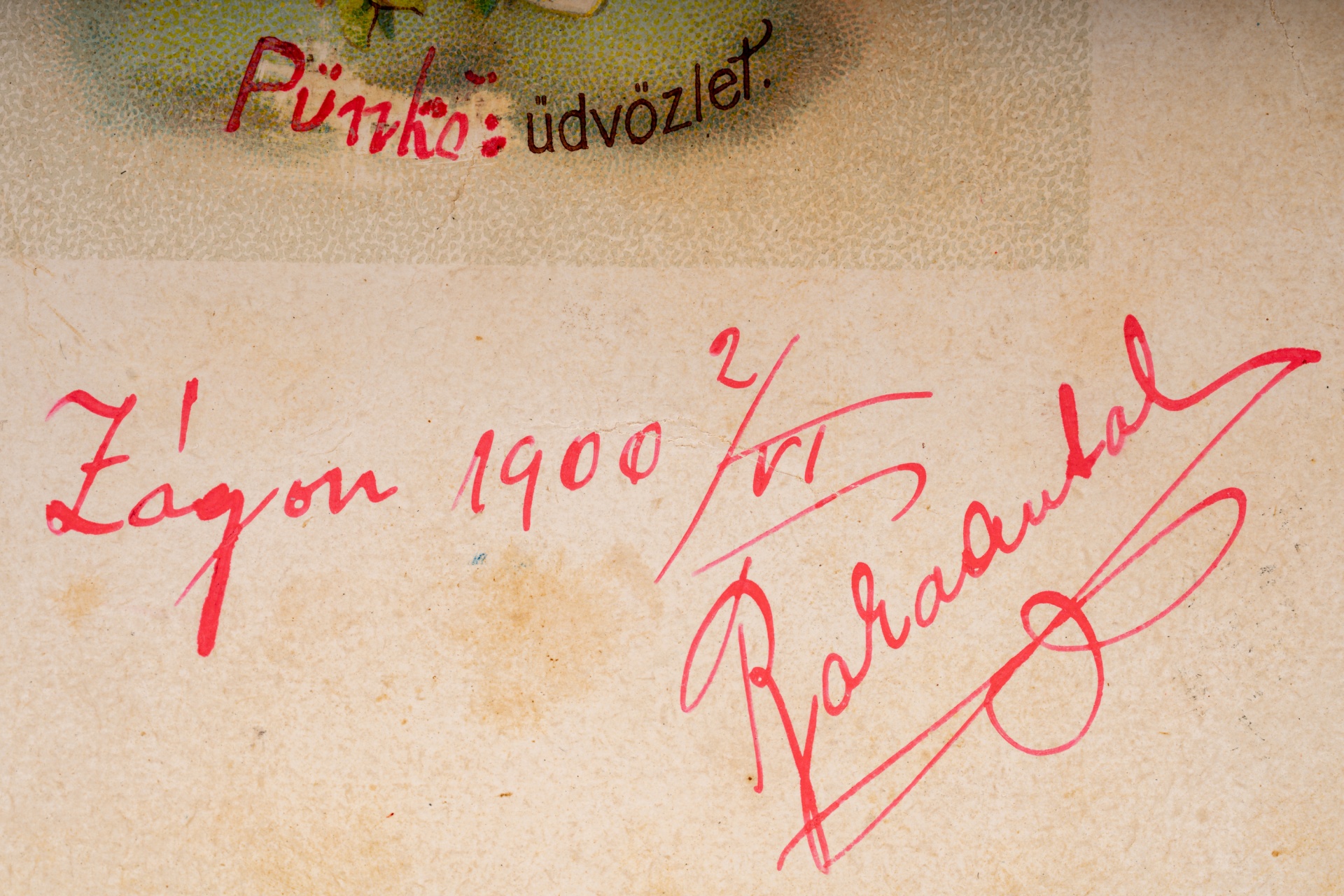
The postcard was sent on Saturday, June 2, 1900, from Zagon by the cantor-teacher Antal Baka. According to the postal stamp, the item was processed and forwarded the very next day, June 3, on Pentecost Sunday. The recipient was Miss Erzsi Baka from Cașinu Nou. Contemporary sources mention both a cantor-teacher named Antal Baka from Zagon and another from Iacobeni, which further nuances the personal story of the object. This encourages historians—as well as readers—to undertake more detailed research into the family’s history, in order to uncover the story behind the postcard.
Postcards offered an excellent opportunity to send short greetings to loved ones and to share news about one’s whereabouts, while the card itself also functioned as a decorative greeting, bringing joy to the recipient. An interesting detail is that this turn-of-the-century postcard contains no personal message. This may suggest that the sender chose the reduced rate and sent the card primarily as a festive greeting.
The widespread use of postcards is also reflected in the regulations applied at the end of the 19th century by the Postal Treasury, which standardized their size and format. The aim of standardization was likely to simplify postal administration. For cards larger or more ornate than the standard, the post imposed an additional fee—namely, a fine of 8 kreuzer charged to the recipient. This was a considerable sum, given that one kilogram of bread cost approximately 12–14 kreuzer at the time.
The sender could also opt for the reduced “Printed Matter” rate, but in this case, they were not allowed to write a personal message, only to indicate their name and address.
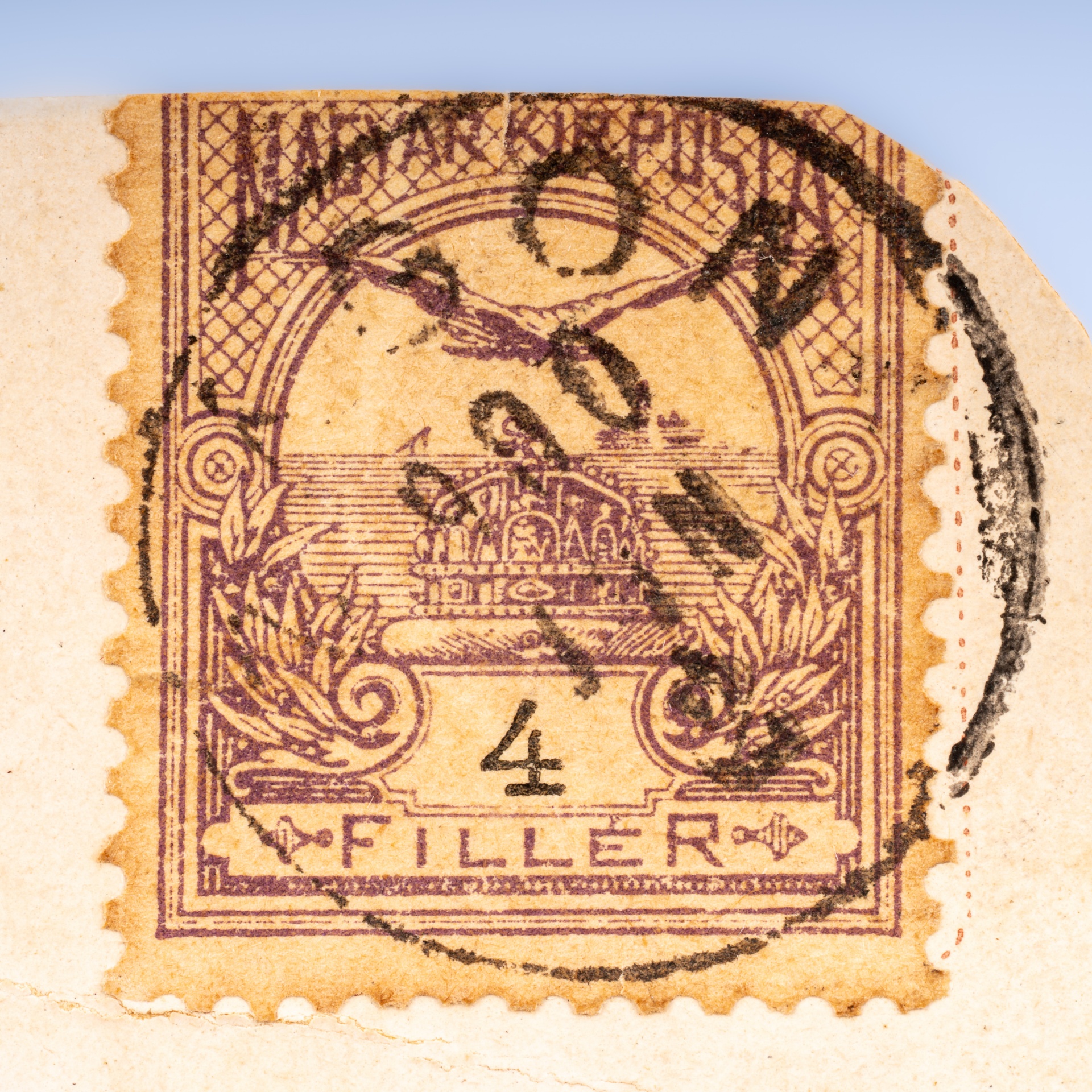
The presented item bears a brown 4-filler “Turul” stamp, associated with the tariff reform that came into effect on January 1, 1900. At that time, the crown–filler monetary system replaced the earlier forint–kreuzer system. The 4-filler postage allowed the sender to use the postcard as a full-value item, meaning they could also write personal lines on it.
The postal marking “900 JUN 3 N”—where “N” indicates the daytime shift—shows that postal services operated continuously even on holidays, likely because the volume of mail increased during these periods, thereby boosting revenue.