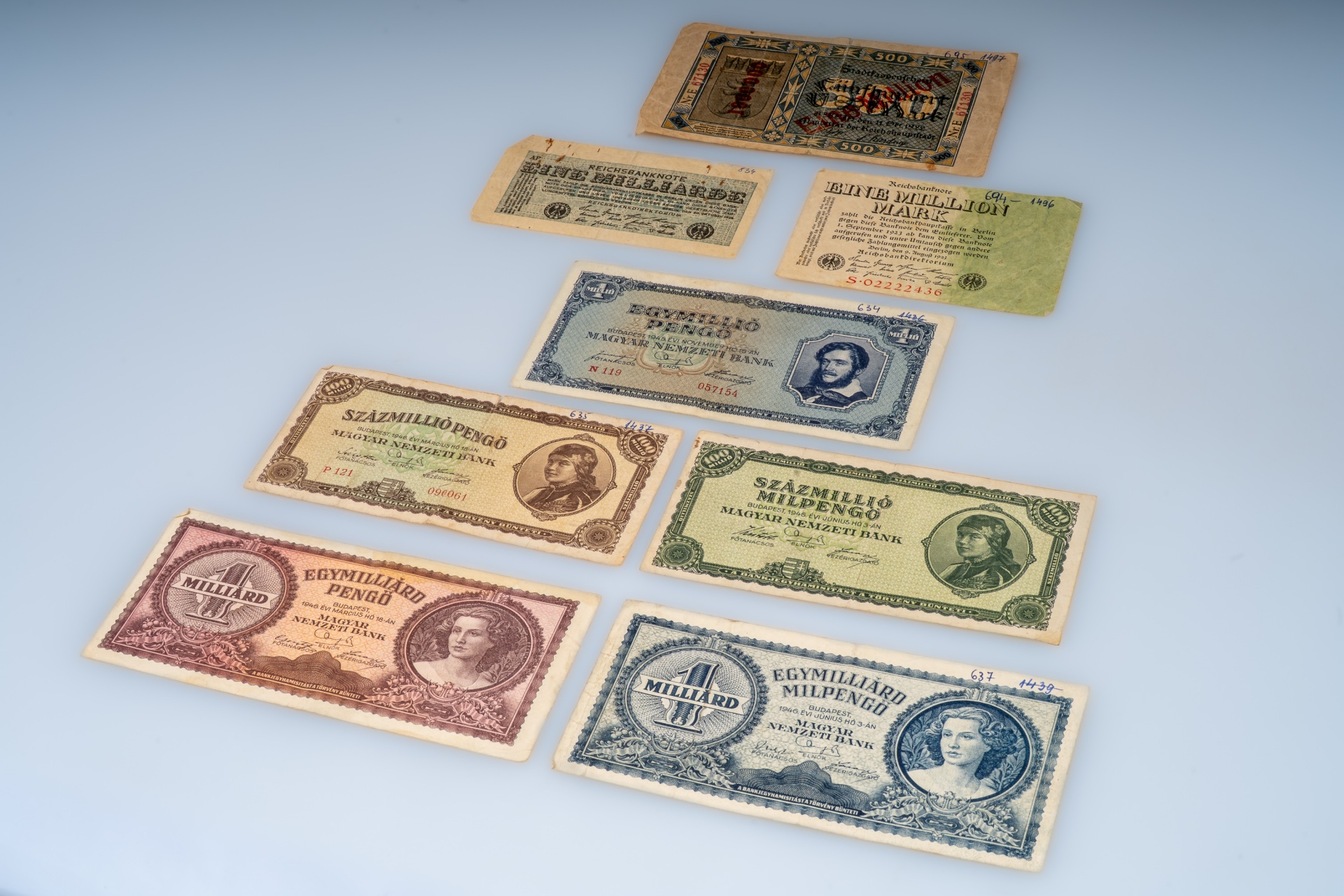
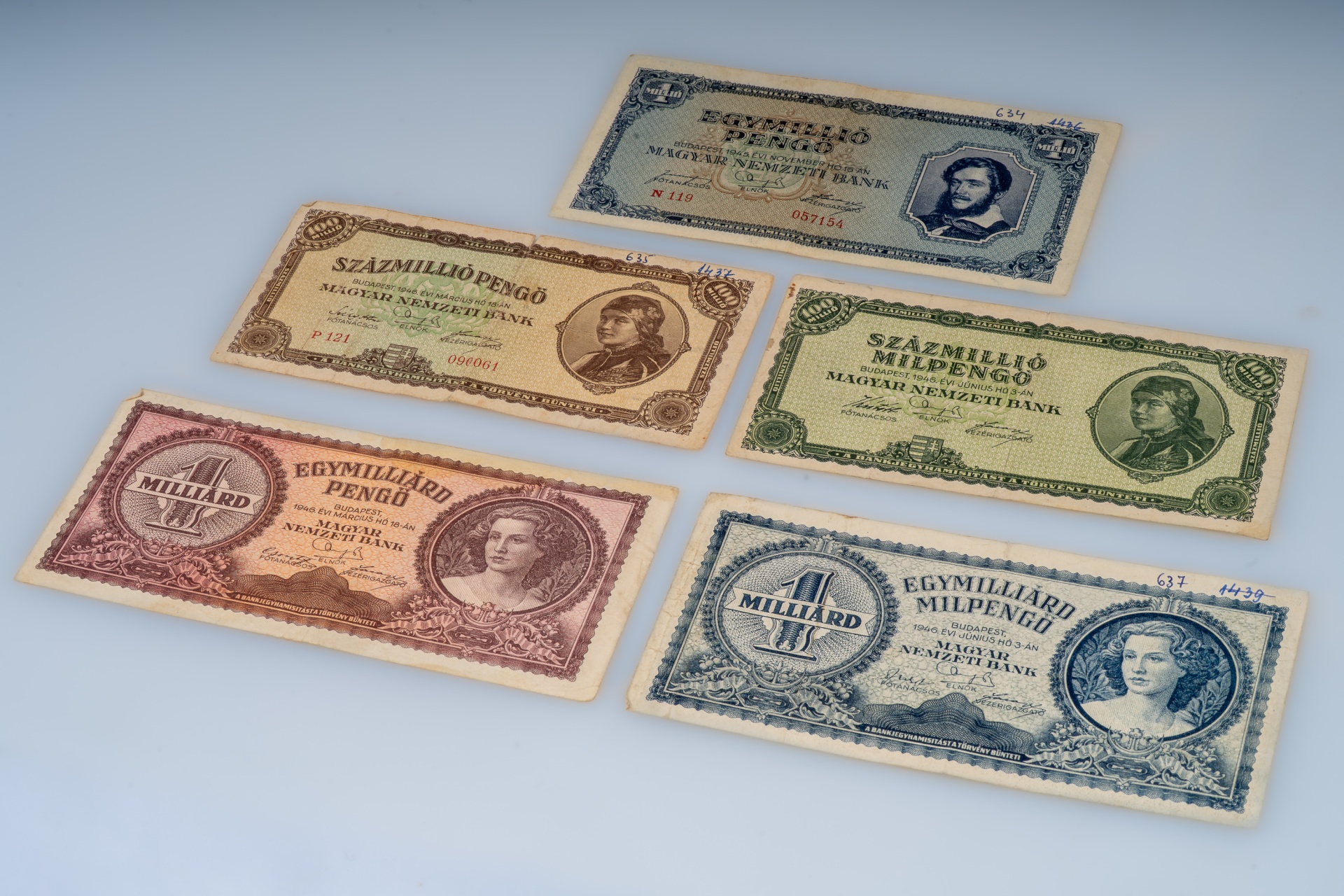
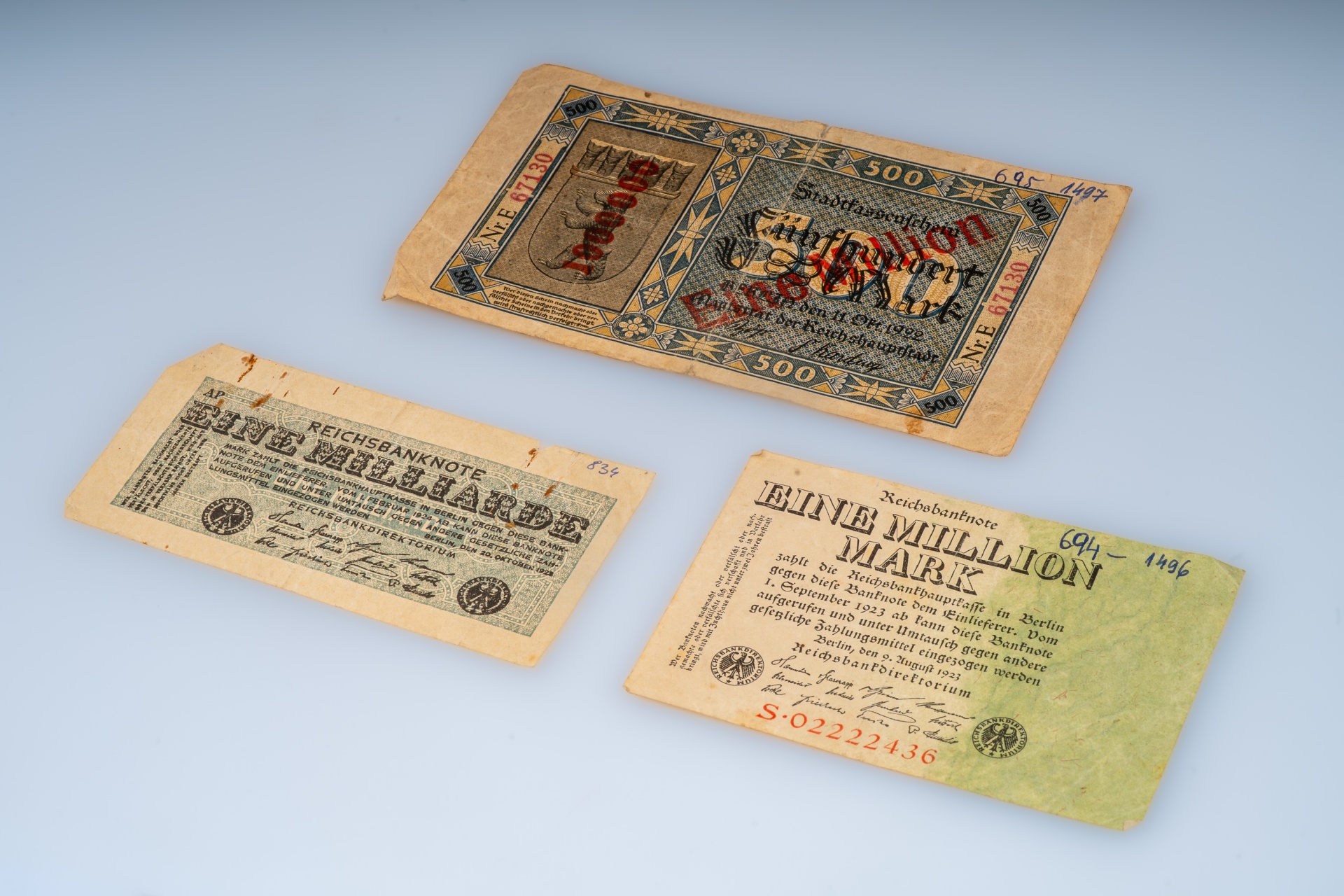
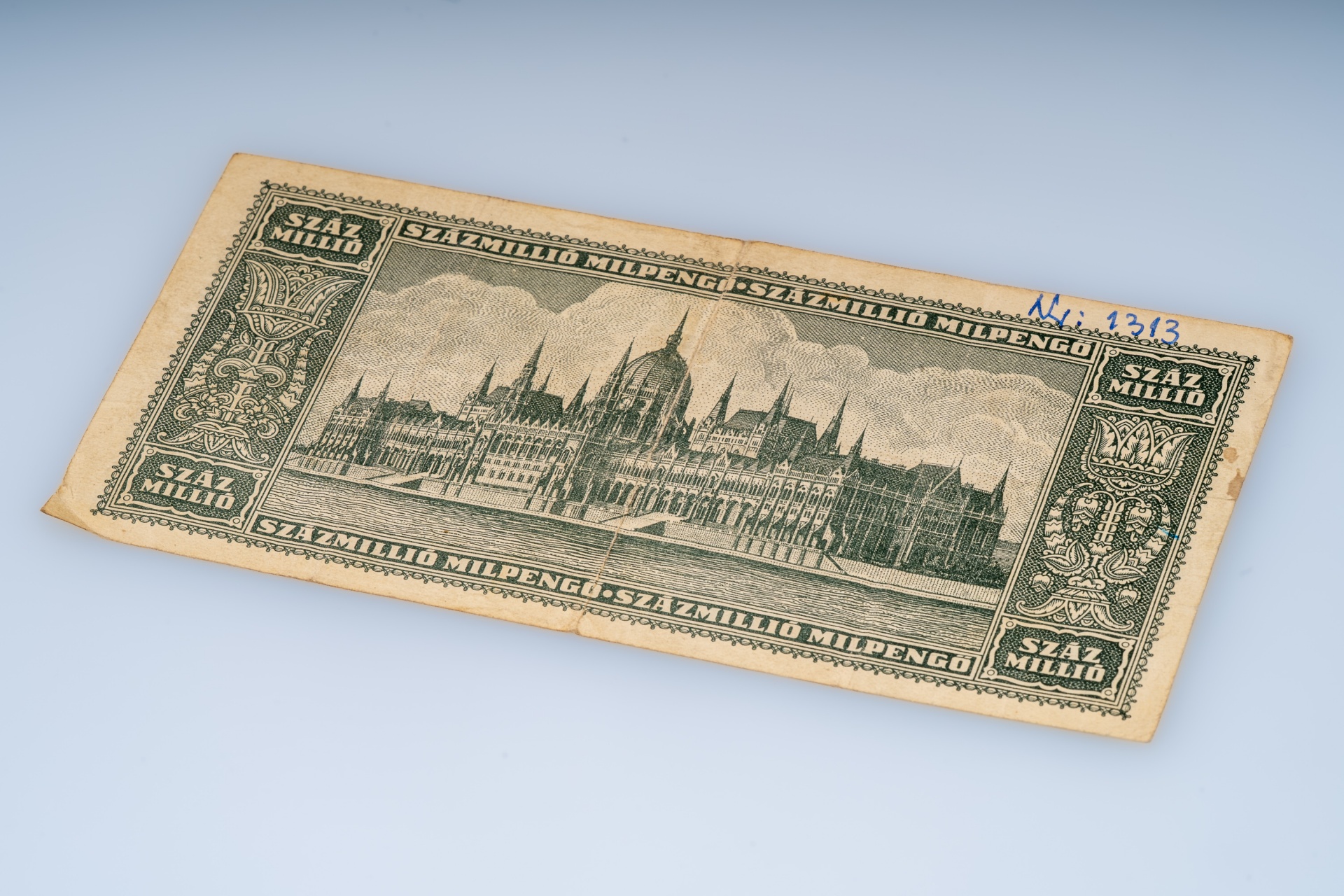
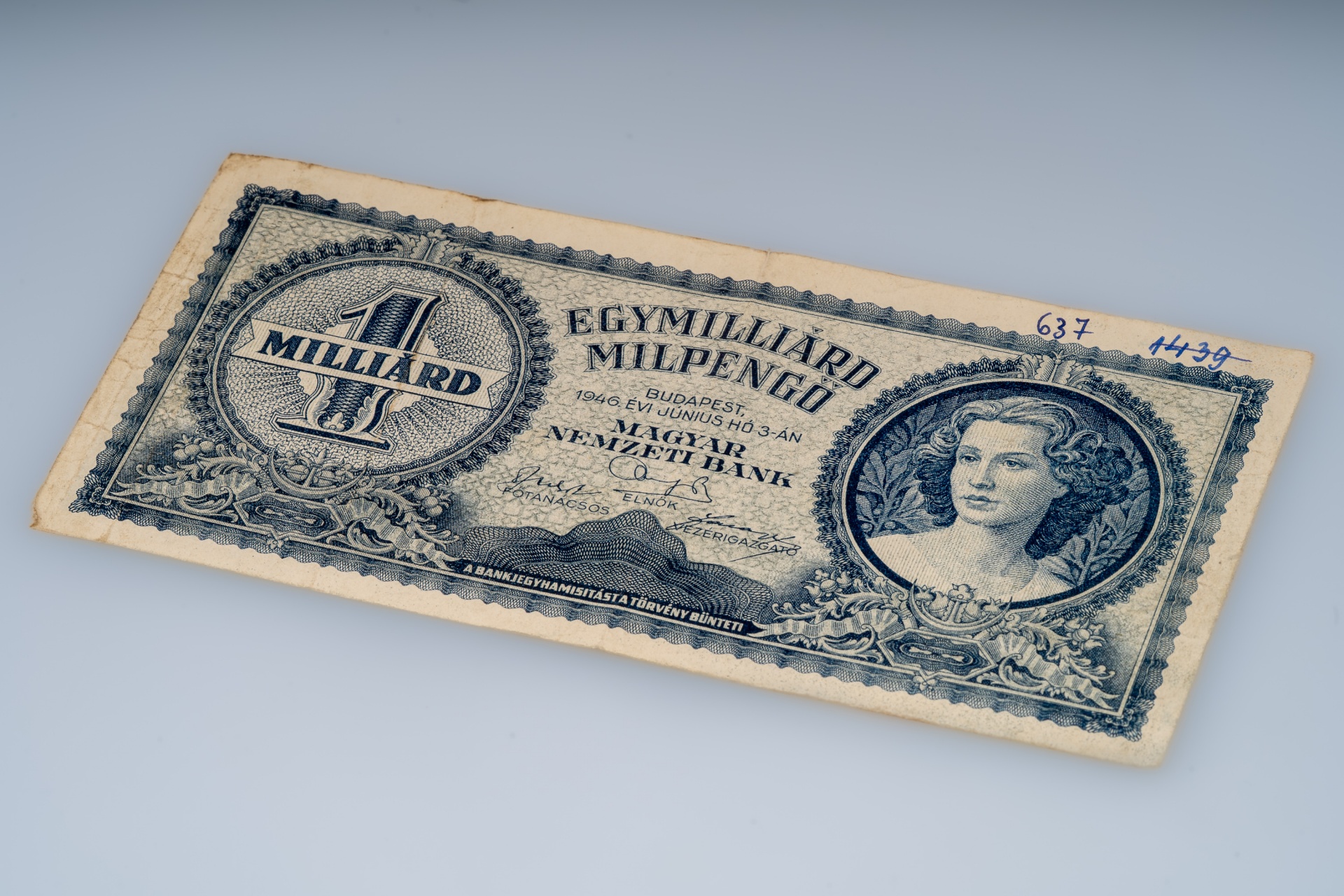
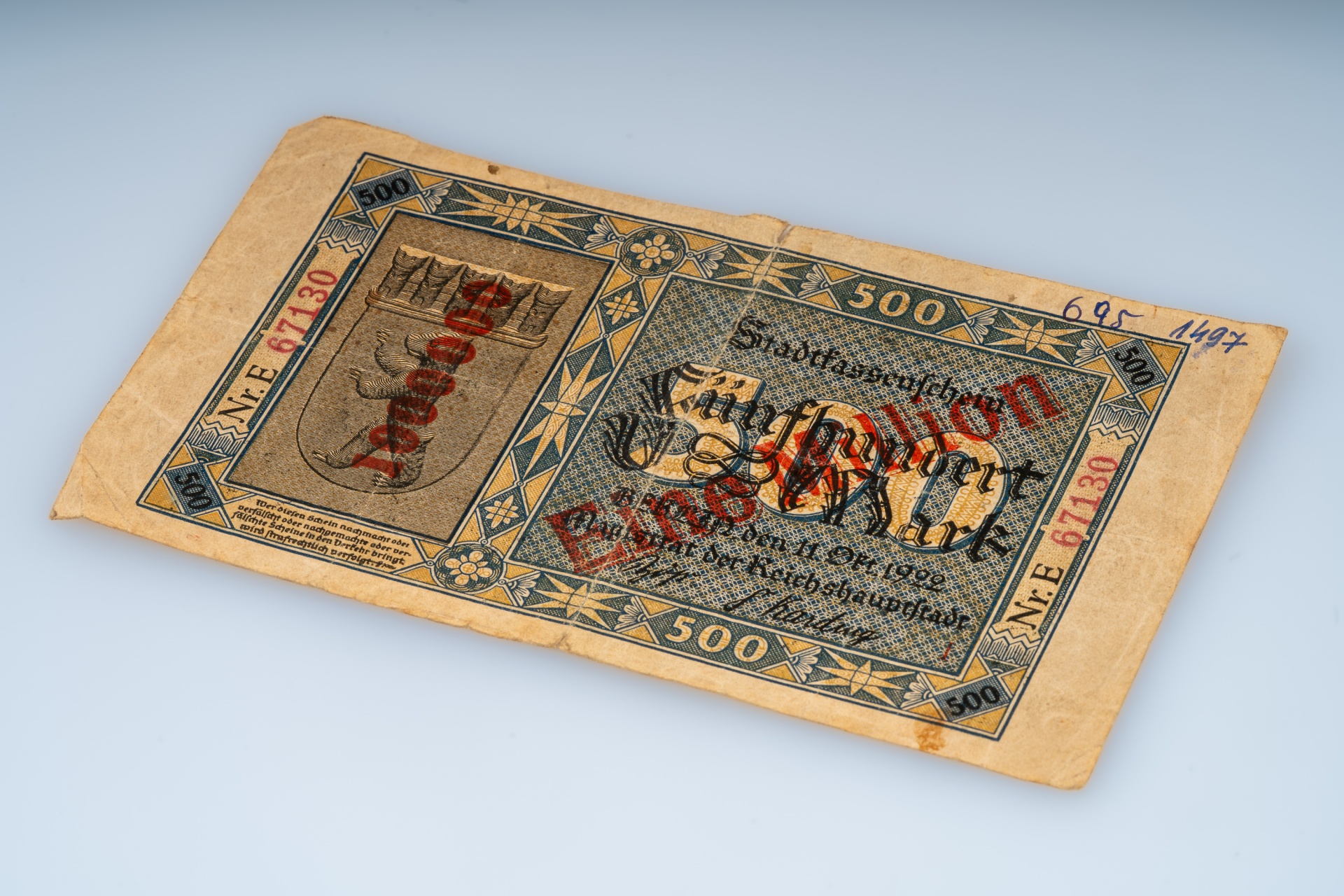
The hyperinflationary banknotes selected from the museum's collection, the subject of September, commemorate the defining events of 20th-century economic history. During the German economic collapse after World War I, it was cheaper to wallpaper your house with banknotes than to buy wallpaper, but even that diminished in comparison to the Hungarian hyperinflation that followed World War II and remains a world record to this day.
Hyperinflation is an extreme increase in the price level of more than 50% per month, during which money loses its value and its purchasing power drops drastically. During World War I, the German Empire abolished the gold standard for the Deutsche Mark, which means that the value of its currency was no longer tied to the value of gold, so it was possible to print more money to finance its war expenses. After losing the war, however, the country was forced to pay huge reparations, the economy collapsed, and prices doubled approximately every two days. The situation reached the point where workers often carried their wages home in wheelbarrows, while the wheelbarrow itself was worth more than its contents. In addition to the one million and one billion notes shown here, an interesting note is the 500 denomination, which was simply reprinted as one million marks, because even the printing presses could not keep up with inflation.
However, Hungary was the country that experienced the hyperinflation of the century. The country's factories, which had been bombed and left in ruins during World War II, were not producing, prices began to rise due to the shortage of goods, and Hungary, as the defeated party, was forced to pay substantial reparations. In response, Hungarian governments began printing unsecured banknotes, with increasingly higher denominations as the inflation increased. Banknotes with denominations of millions, hundreds of millions, and billions appeared, but as prices rose by 1500% per day, even higher denominations were needed, so to facilitate calculations, milpengő (million pengő), simplified with six zeros, and bilpengő (billion pengő), simplified with twelve zeros, were also put into circulation.