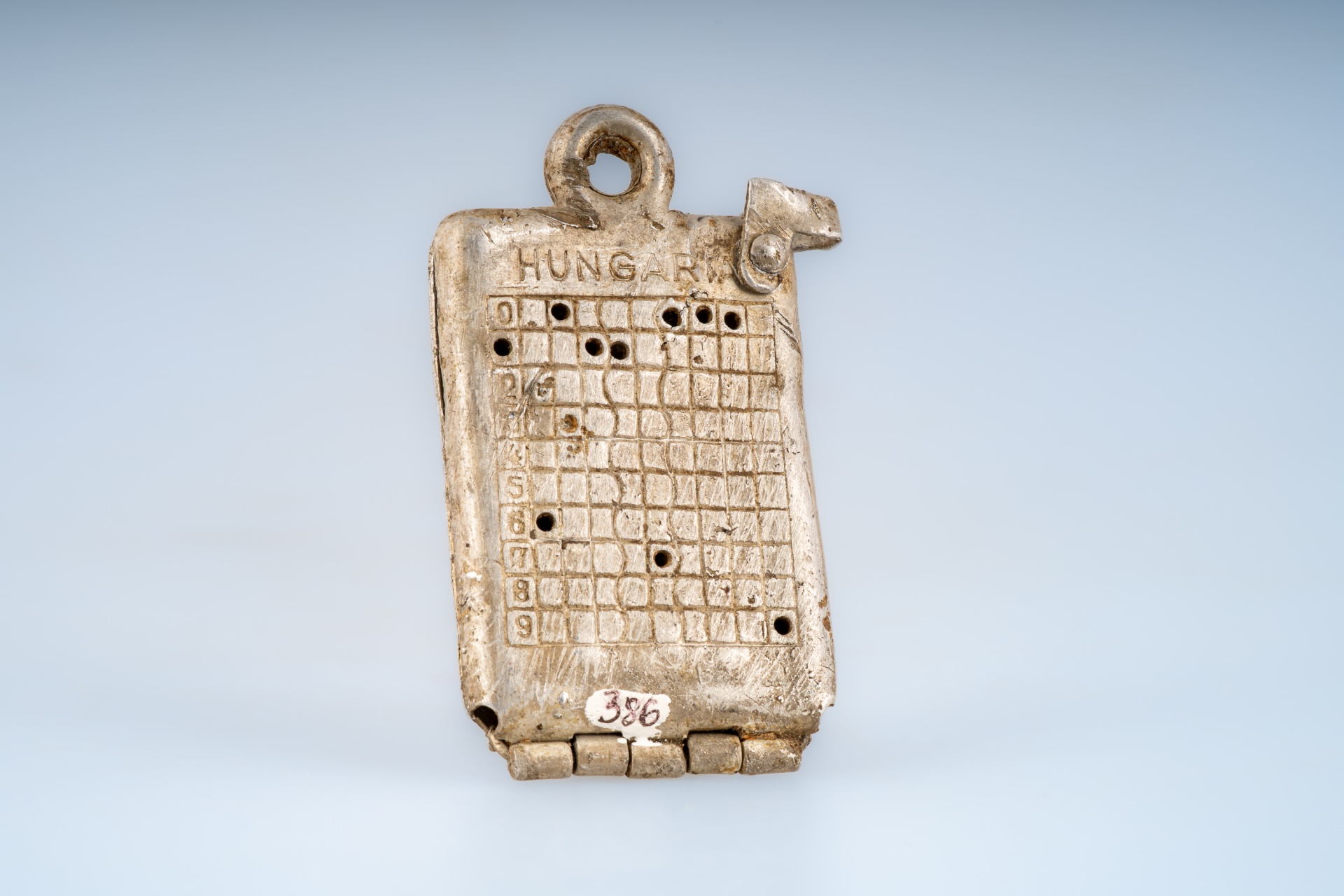
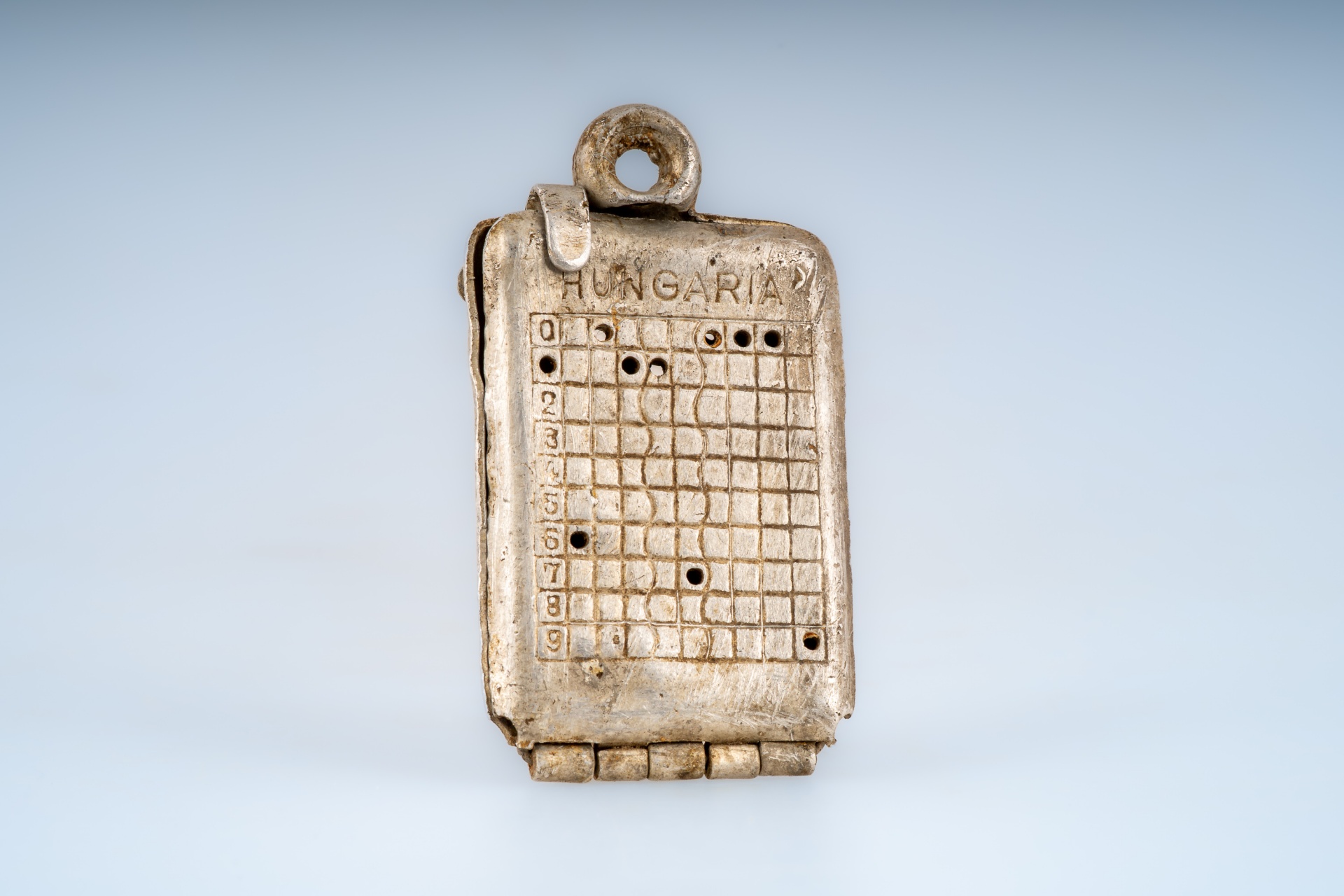
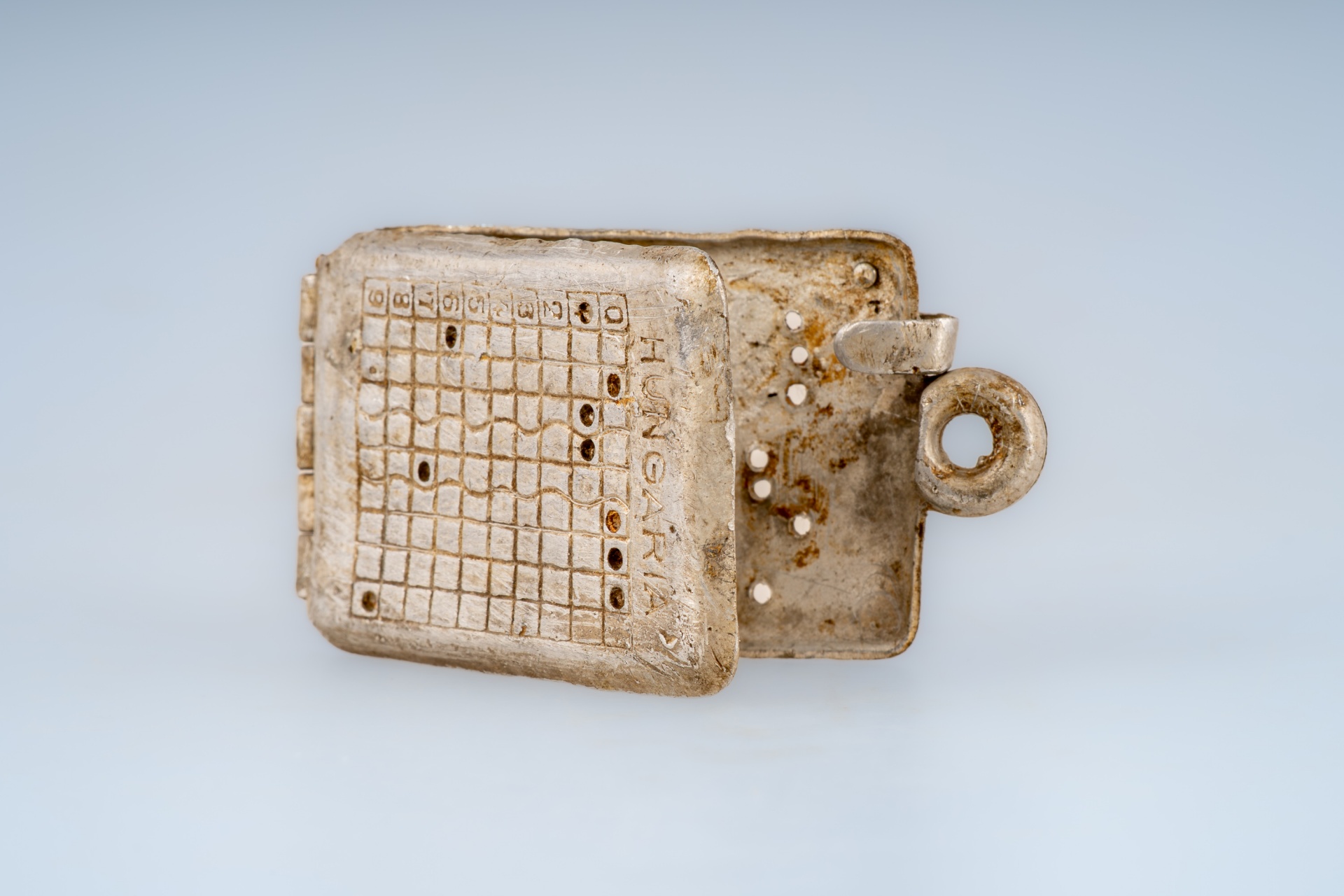
The official designation of this small metal object is identification tag, but among Hungarian soldiers it became known as „dögcédula” (“dead man’s tag”). It was used to identify soldiers who fell on the battlefield. The use of personal identification tags dates back to the American Civil War, while in Europe they appeared during the Franco-Prussian War (1870–1871), when soldiers jokingly referred to them as „Hundemarke” (“dog tag”), in reference to the registration tags used for dogs. This is also the origin of the English term “dog tag”. The term „dögcédula” used by Hungarian soldiers (dög = dead animal, cédula = tag/slip), with its characteristic dark humor, referred directly to the object’s primary and inevitable function.
In Hungary, the Ministry of Defence ordered the use of paper identification tags in 1878. These had to be carried in a brass case attached to a trouser button with a woolen cord. During the First World War, the practice was introduced of stamping the information onto the metal case as well, in case the paper document was destroyed.
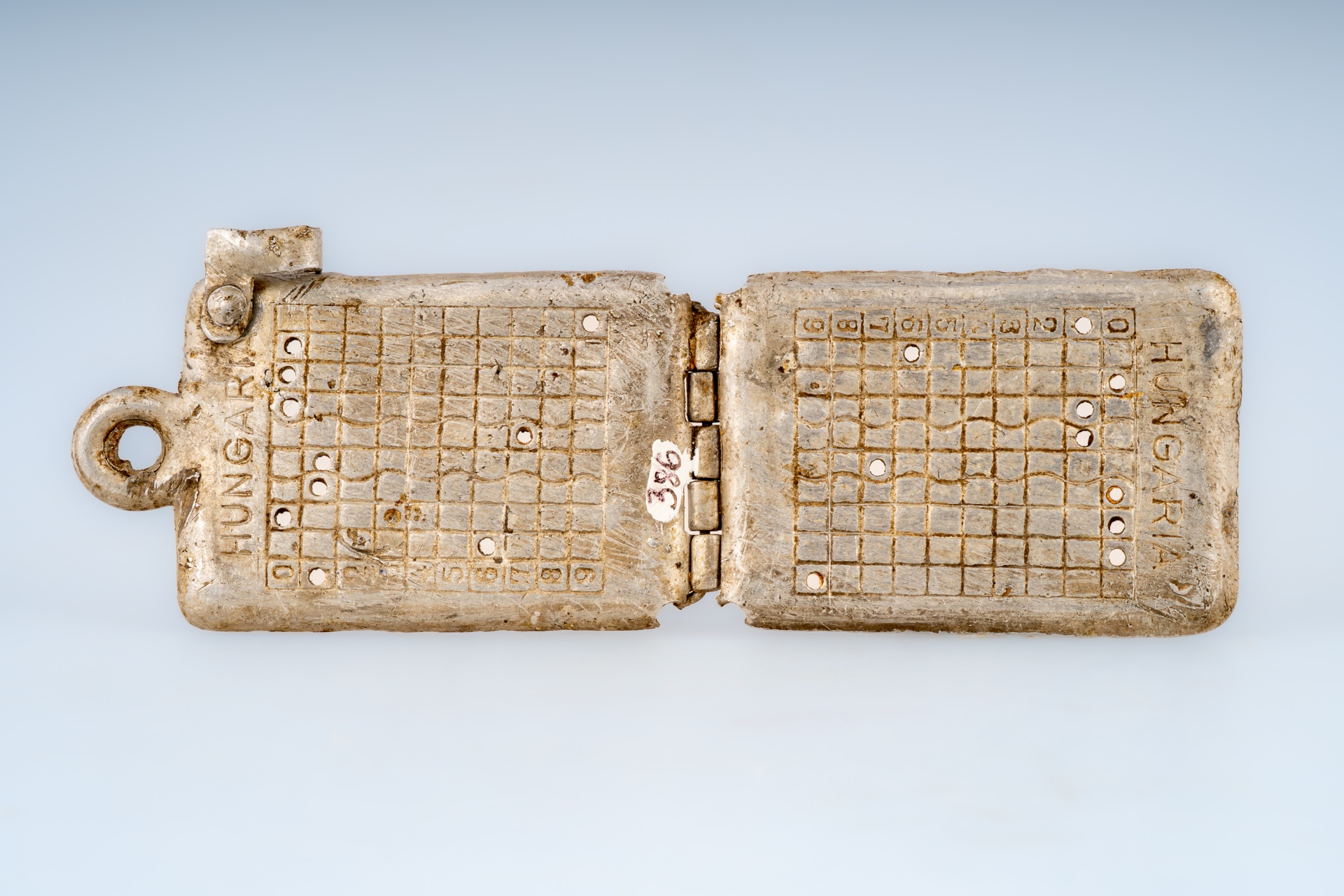
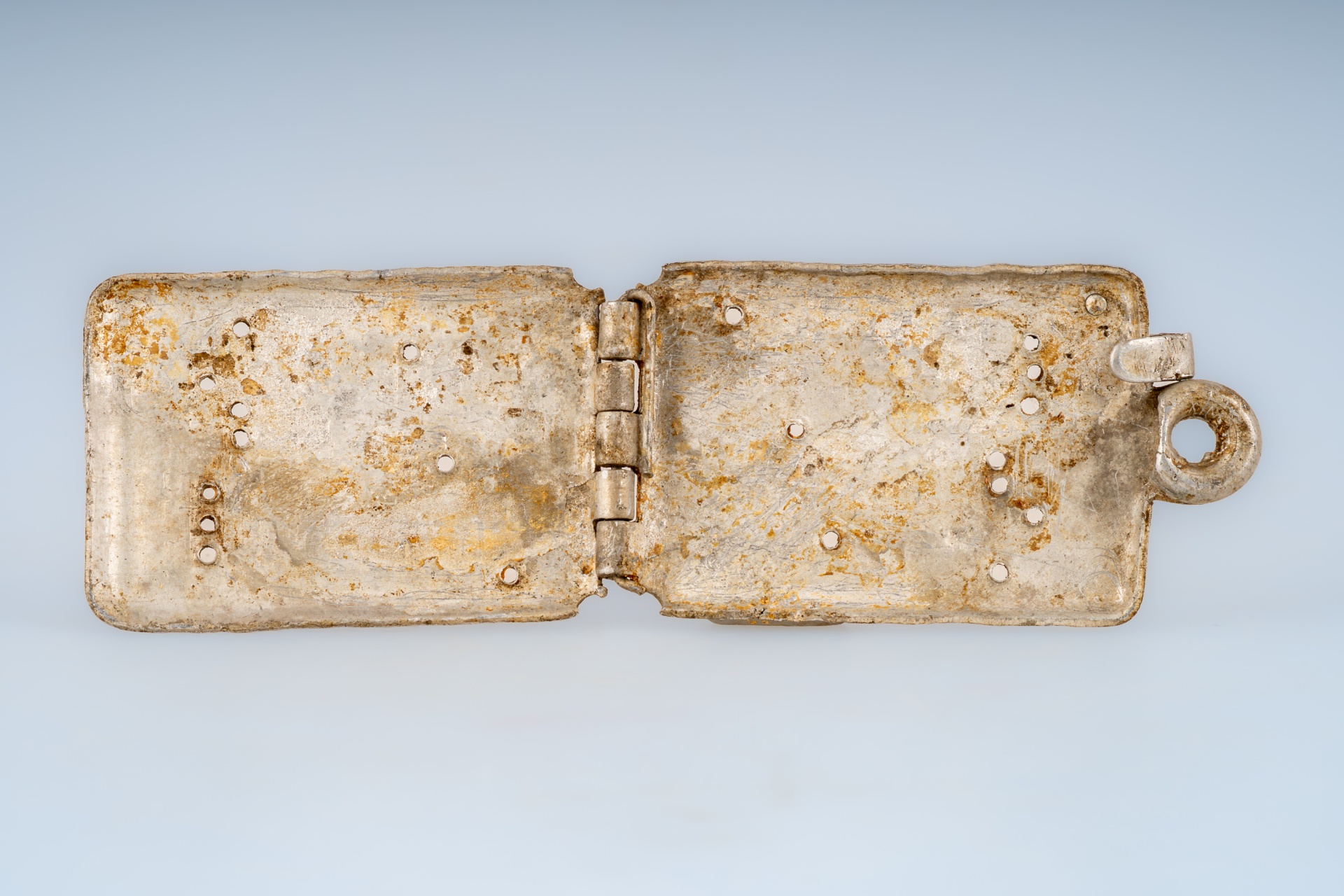
The 1936M identification tag, introduced into the equipment of the Royal Hungarian Army in 1937, was an unusual object even by international standards. The aluminum case, bearing the inscription “HUNGARIA” on both sides, not only recorded the soldier’s most important military data through a perforation-based coding system arranged in a 10 × 10 grid, but also contained a paper document bearing the soldier’s detailed personal information.
The exact history of the identification tag in our museum’s collection and the identity of its wearer was uncovered through a complex research process involving several institutions:
- With the expert assistance of the Institute and Museum of Military History of the Hungarian Ministry of Defence (HM Hadtörténeti Intézet és Múzeum), the administrative district (Alberti / Pest County) in which the soldier had been registered in the civil registers was identified on the basis of the numerical codes stamped into the metal tag.
- Archival research conducted by the Pest County Archives of the National Archives of Hungary (Magyar Nemzeti Levéltár Pest Vármegyei Levéltára) revealed the exact civil registration data: the owner of the object was Károly Kassik, born on 12 January 1917 in Alberti.
According to wartime procedures, one half of the identification tag of soldiers who died in combat was buried together with the deceased, while the other half was handed over to the services responsible for recording military casualties. In the case of Károly Kassik, however, the archival research brought a happy turn of events: subsequent entries in the civil registers revealed that he survived the trials of the Second World War and, after a long life, died in 2003.
The paper identification document deteriorated and was lost over the decades, so today only the aluminum case preserves the memory of its former owner.