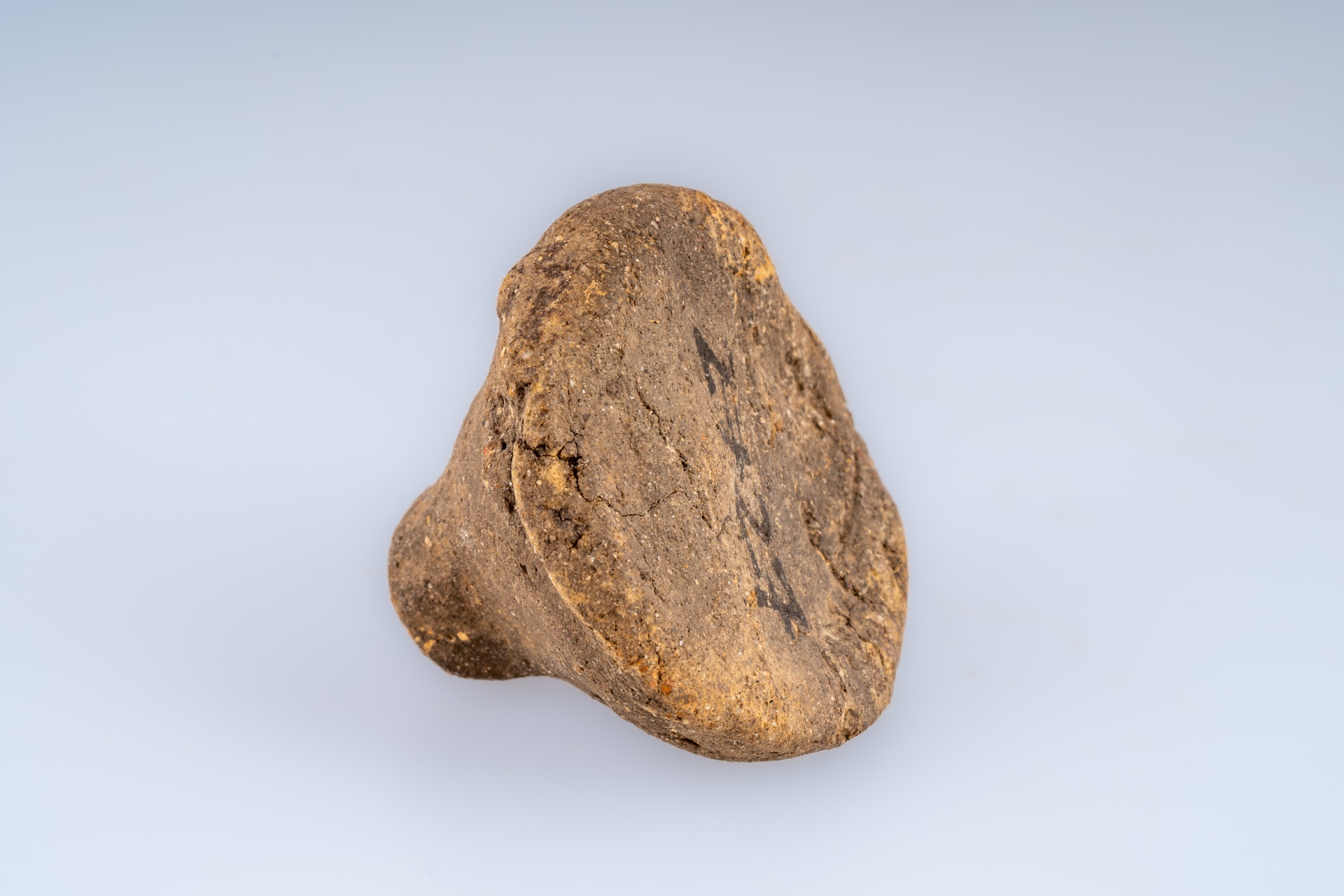
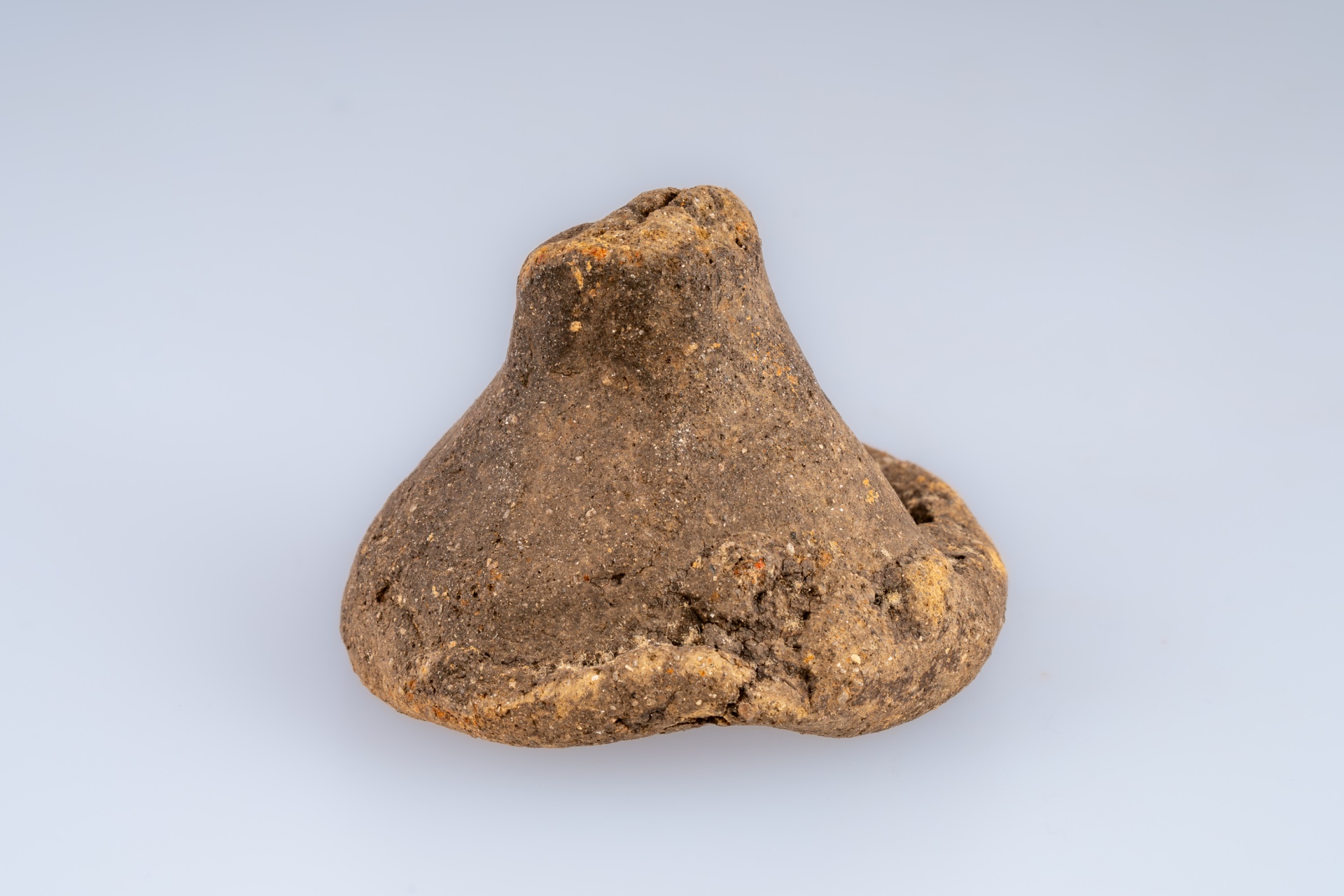
As the theme of June, when we celebrate Children's Day, we are exhibiting an Early Bronze Age rattle. The object was discovered in 1971 at the site called Szentlélek-Kőhegy. The excavations lasted for several years, the results of which were presented by archaeologist Petre Roman.
What we know for sure is that this rattle comes from a place where there were houses. It is made of clay, undecorated, and since it has not been subjected to various tests, we can only rely on researches on similar discoveries, according to which the balls inside that produce the sounds could be seeds, pebbles or clay. The handle of the rattle is missing.
These rattles were usually discovered in burial sites. We can mention the bird-shaped rattle vessels from the Middle Bronze Age, discovered in Hungary (birds had special respect in the Bronze Age, there are numerous such representations from that period).
There are different ideas about the use of rattles, which vary depending on their size. Some are larger, as a result the balls inside are larger too, in order to produce a louder sound. These larger ones may have been musical instruments used for ritual dances.
It may also have been, like today's rattle, the first toy for babies and young children, not only because it lulled them to sleep or held their attention, but also because it was their first contact with sounds and music. In many cultures, these were considered to drive away evil spirits.
What makes it even more special is the fact that in our country it is considered a very rare discovery.
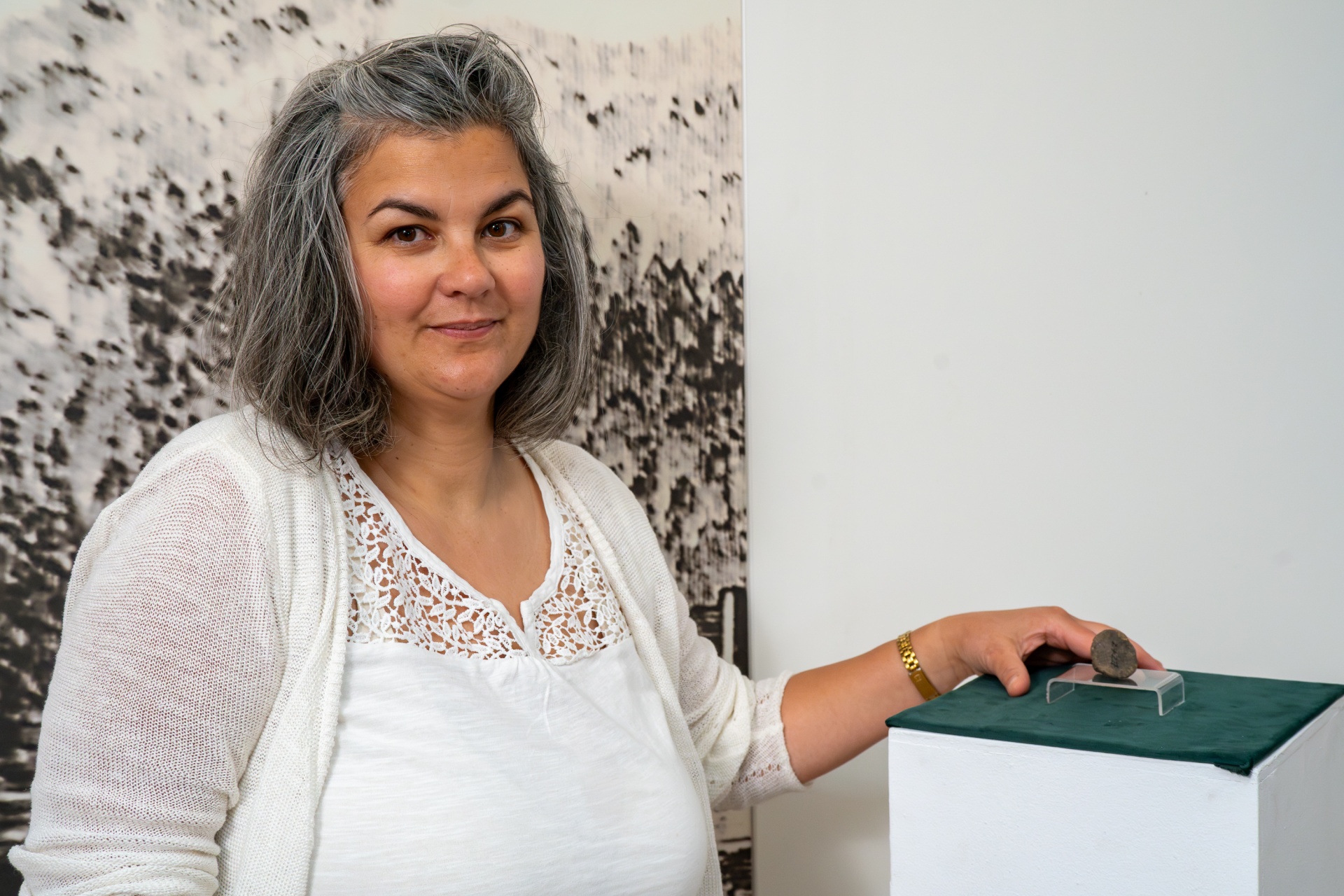
The rattle can be admired at the museum's ticket office from Tuesday to Sunday, daily between 9:00 and 17:00.