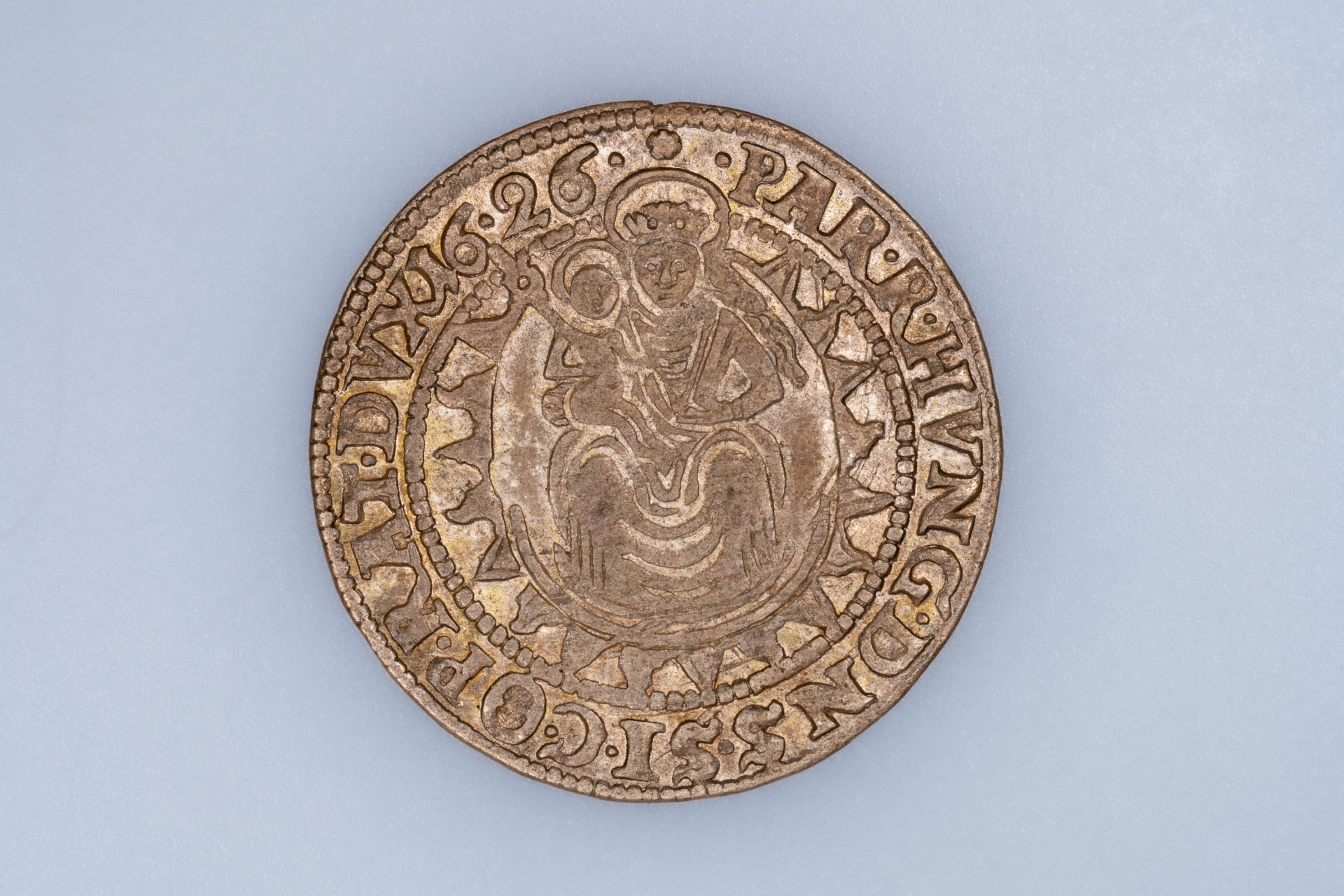
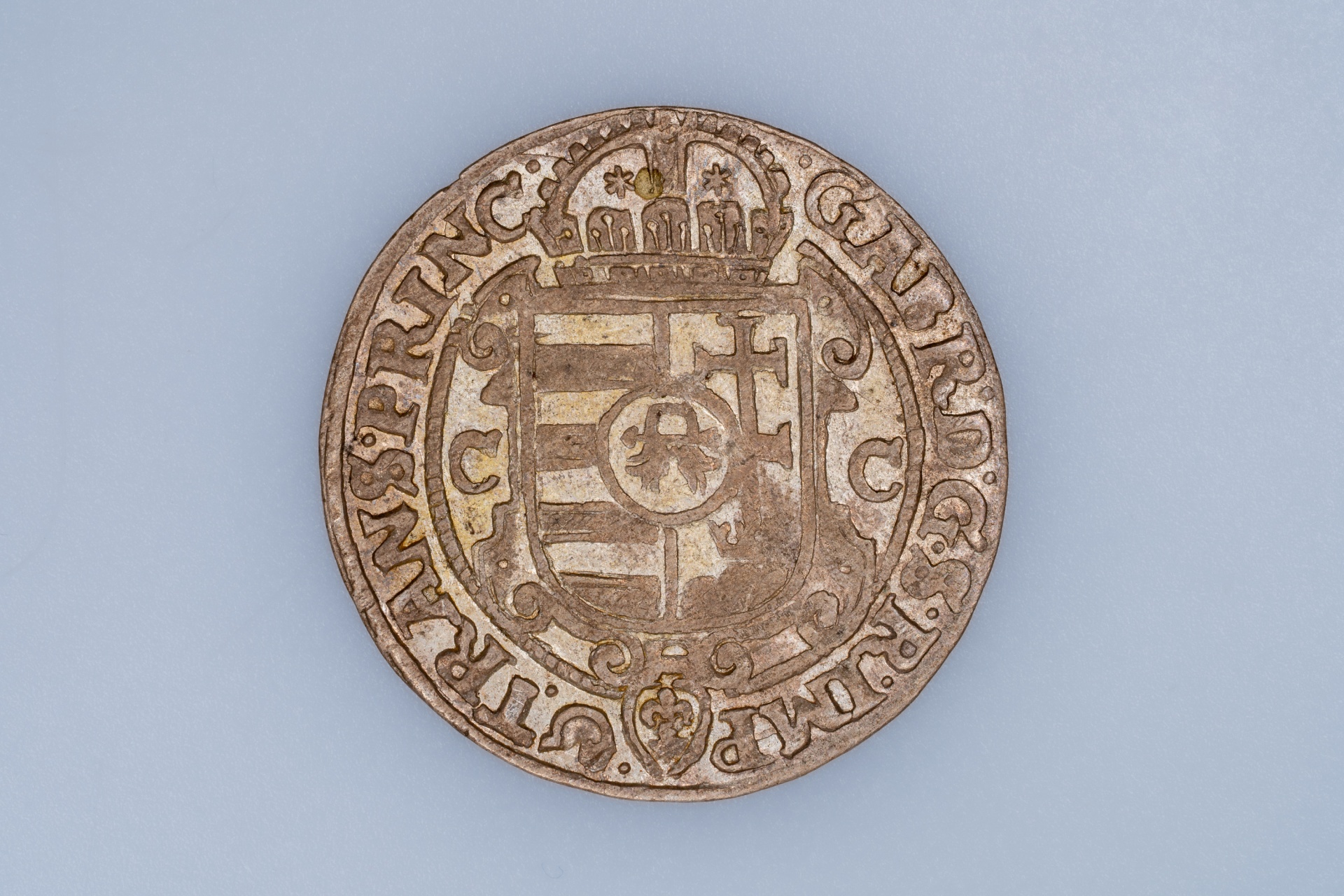
The object of the month for January at the Szekler Museum of Ciuc is the 1626 silver coin of Gábor Bethlen, representing the message of stability.
In the depths of the numismatic collection lies a real treasure: the silver coin of Principle Gábor Bethlen, minted in Košice in 1626. This small coin was made several hundred years ago, but its message is still relevant today, especially in times of economic uncertainty.
The saying goes that “Money does not bring happiness”, but Gábor Bethlen’s coin conveys to us: monetary stability brings security and independence.
The reverse of the coin depicts the Virgin Mary and the baby Jesus. The use of this motif, Patrona Hungariae (Protector of Hungary), was common on Hungarian coins of the time, reinforcing national and religious legitimacy.
Interesting fact: The figure of the Virgin Mary first appeared on the reverse of a copper coin of Béla III, sometime in the last third of the 12th century. Here, Mary is depicted without the infant Jesus, holding a spear in her right hand, and the inscription around her, Sancta Maria, clearly identifies her. Then, a few centuries later, the Virgin appears on the coins of Matthias I, probably due to Matthias's well-known veneration of Mary. Matthias' coins originally featured the veiled figure of the Virgin Mary, which was replaced by a crowned figure. Under his immediate successors, the Virgin Mary appeared in various forms, always in the artistic style of the period.
The image of the Madonna became so popular that even the Habsburgs did not dare to change it, so it remained an element of gold and silver coins into the modern era, the only exception being the thaler.
Depictions of the Madonna remained on coins until the mid-20th century, last appearing on coins minted under the Penghe monetary system. The Madonna's image was last seen on circulating coins until the mid-20th century, on coins minted under the pengő monetary system.